Password
Case study
Catapult Sports
An iOS app that taught elite athletes to study film, not just watch it.
Role
Product designer
Platform
Native iOS app
Domain
Sports technology
SCOPE
Research to high-fidelity design
The reframe
The brief was access. The real problem was learning.
Early in research, the actual problem turned out to be more interesting than the one we were handed. Players did not just lack good access to film. Most of them did not know how to study film at all. Coaches were experts at breaking down game footage, and because coaches did all of that analysis for the team, players never developed the skill themselves. They could watch film. They could not yet read it.
That is a teaching problem before it is a software problem. I spent years as a high school teacher before moving into design, and the failure I recognized here was a familiar one: a group gets taught to be fluent collectively while no individual ever builds the underlying competency. The film tool everyone assumed they needed would not fix that. So I reframed the project. The goal was not to make film easier to reach. It was to build players' ability to analyze it on their own, the way a coach would, and to build what the sport calls Sport IQ.
That reframe became the spine of every design decision that followed.
Research
Designing for what works, not just what's broken
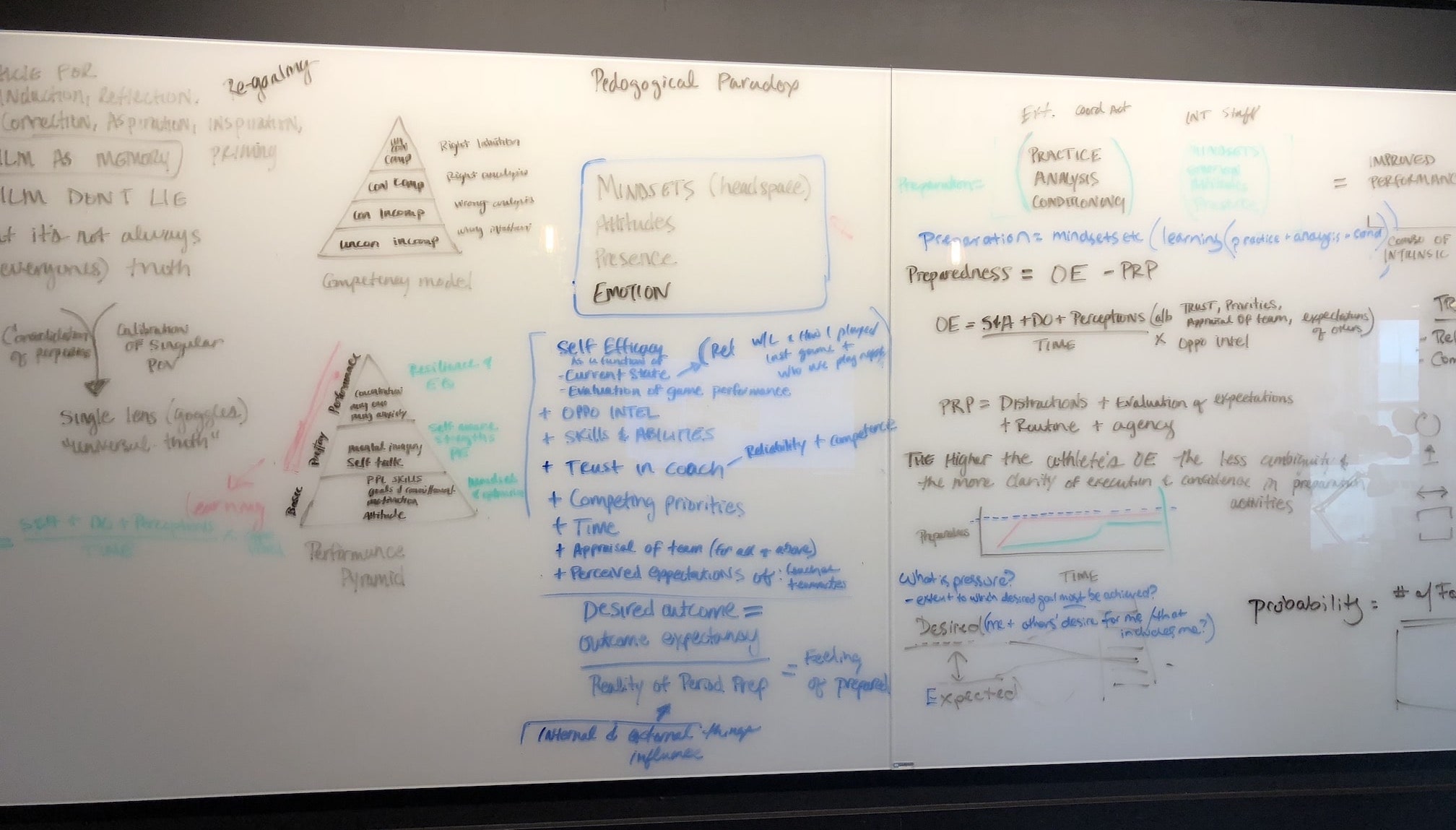
We approached research through positive psychology rather than a standard pain-point audit. A typical research pass hunts for problems to fix. Positive psychology asks a different question: what does it look like when an athlete is at their absolute best, and how do you design to reproduce that? The aim was not only to remove friction but to engineer the conditions for focus, confidence, and excellence.

Men's basketball

Men's Football

Women's Soccer
Three Division I programs across three sports and both men's and women's athletics, so the patterns we designed for held up beyond any single sport or team.
What we learned
Four findings shaped the product directly
01
Film is memory, and it serves more than one purpose
Game footage is the one record that does not lie, and a team that watches it together builds a shared way of seeing. But film is not only for correction. Players use it to prepare, to prime themselves, and to build belief. A tool that only supported review would miss most of why athletes watch.
02
Easy access changes behavior
The easier film is to get to, the more often players watch, and the less time the whole team spends on teaching and learning. Friction was not a minor annoyance. It was the difference between a habit and a chore.
03
Routine creates control
Players prepare on a cycle that resets after every game and re-forms around the next opponent. A consistent routine going into a game builds the confidence and sense of control that lets athletes perform. Disrupt the routine and you erode the confidence.
04
Confidence is built, not given
Low self-efficacy undermines execution, and clear knowledge of an assignment replaces ambiguity with certainty. Much of what separates a prepared player from an anxious one is whether they have internalized what to do until it feels automatic.
Concept ideation
Testing the direction with athletes
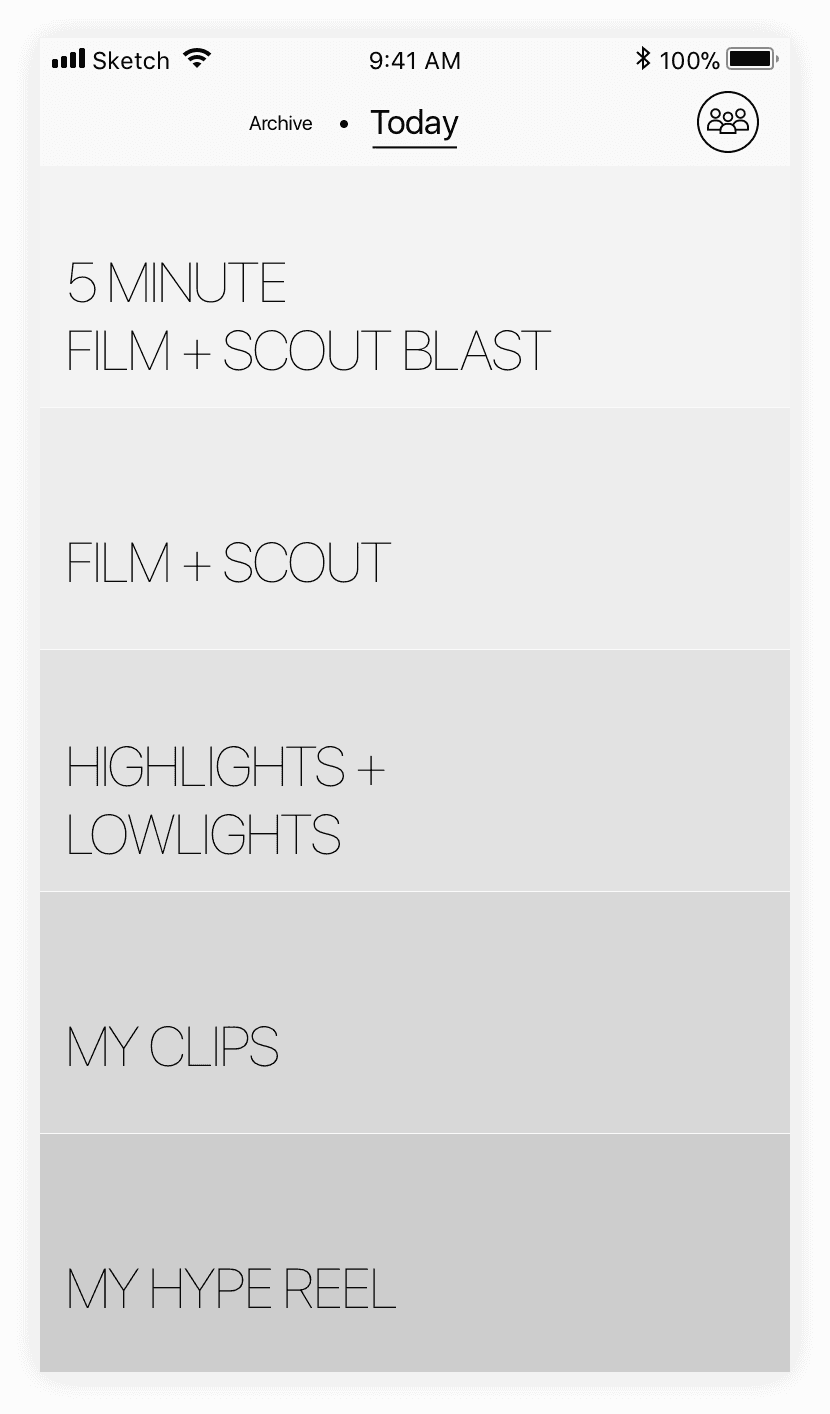
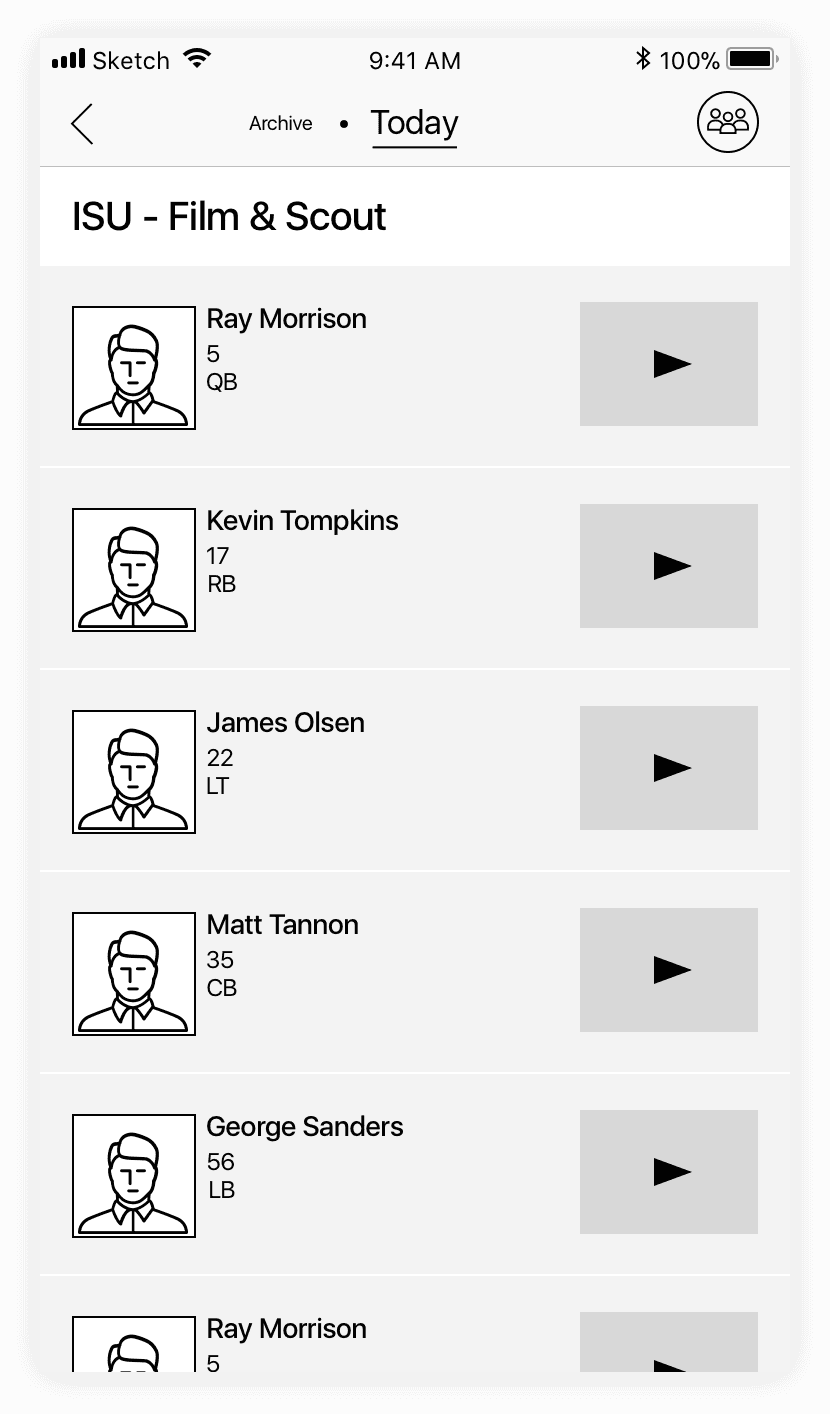
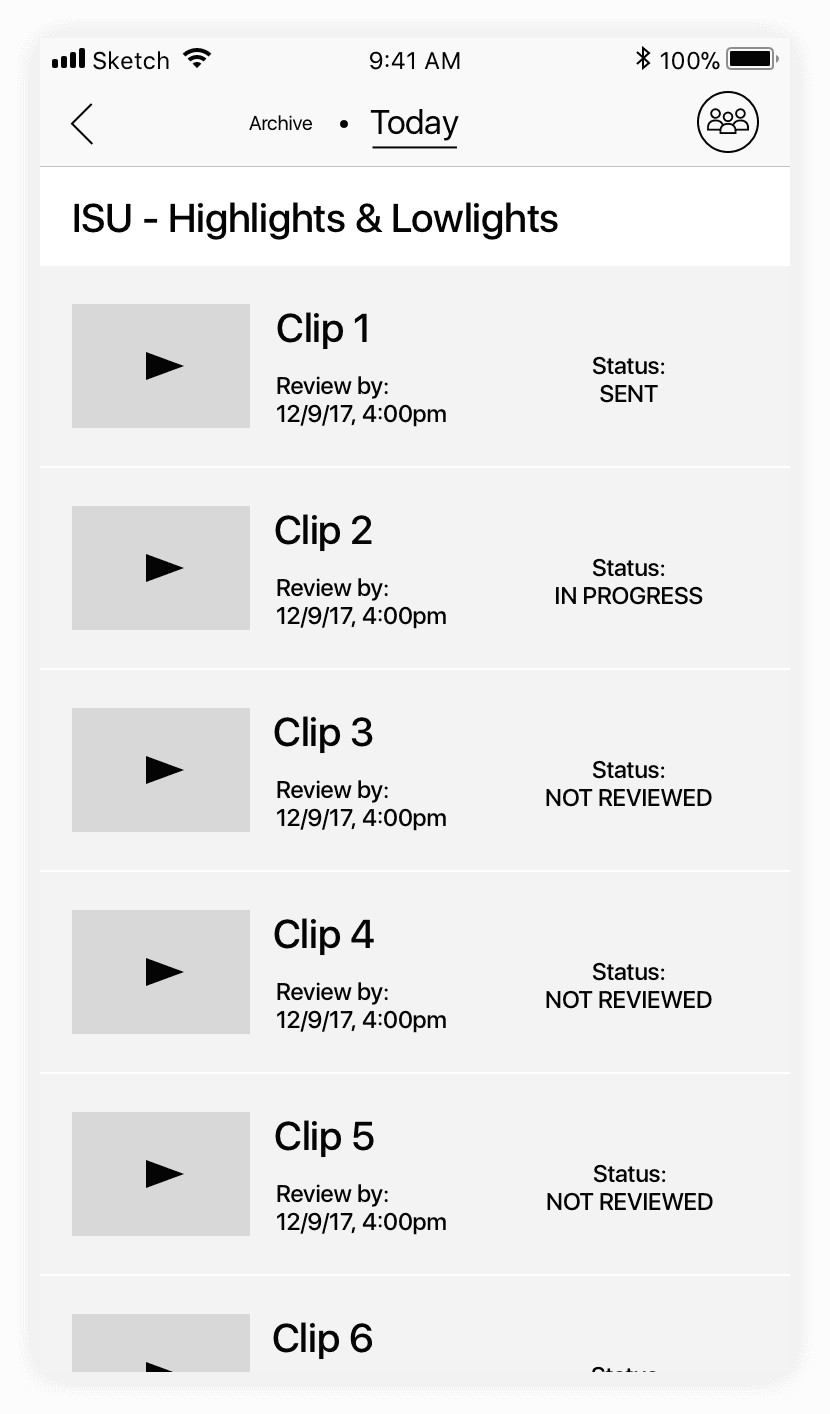
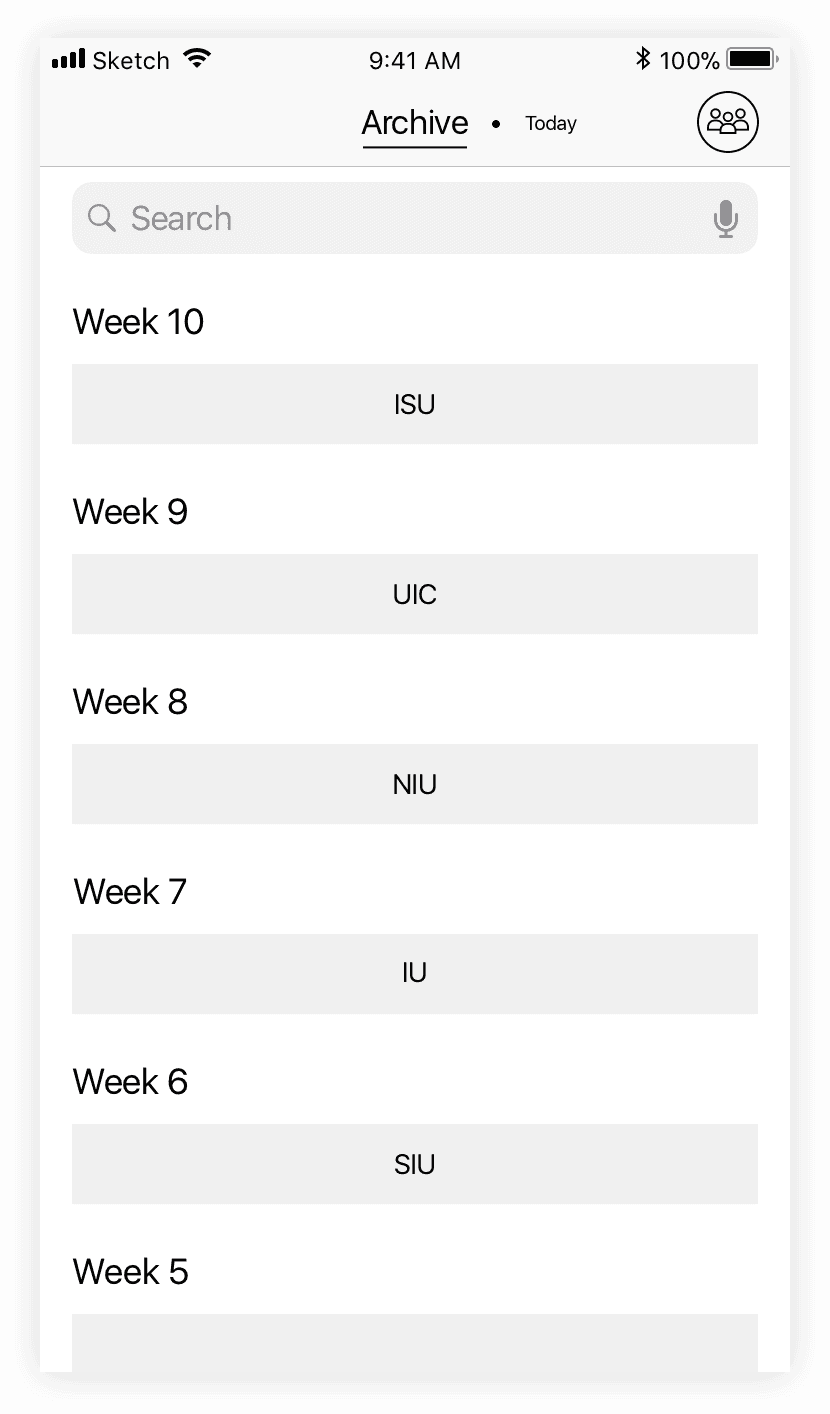
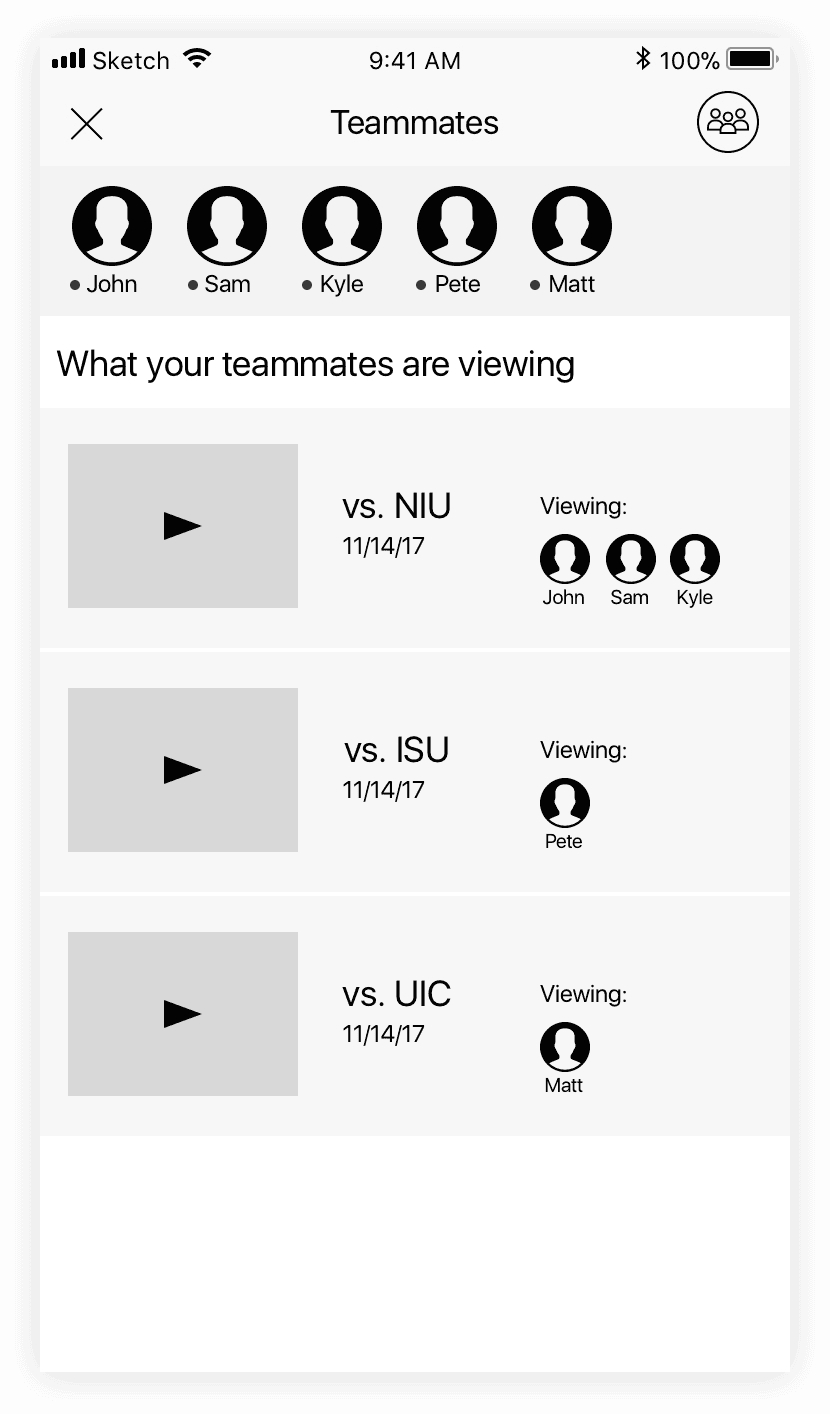
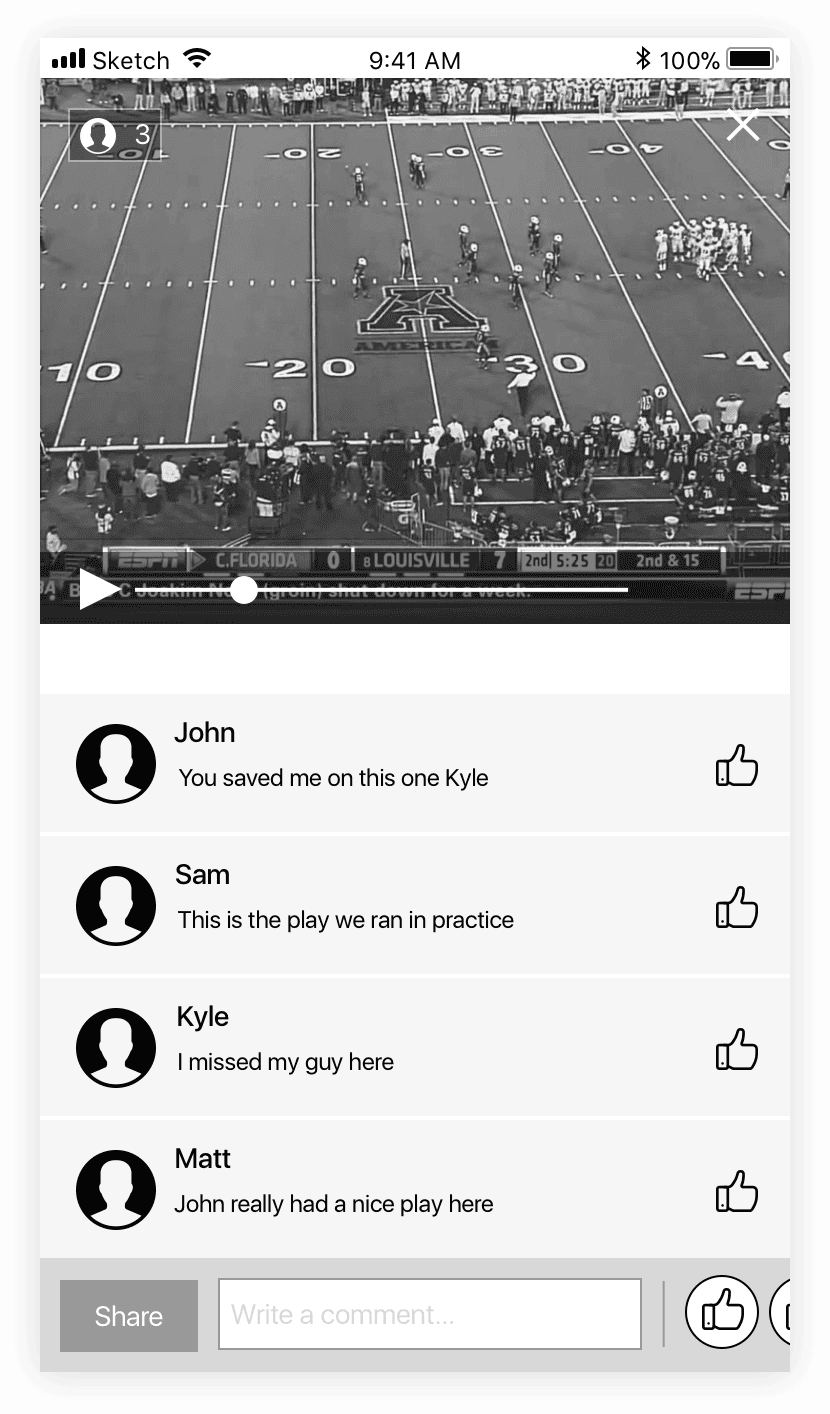
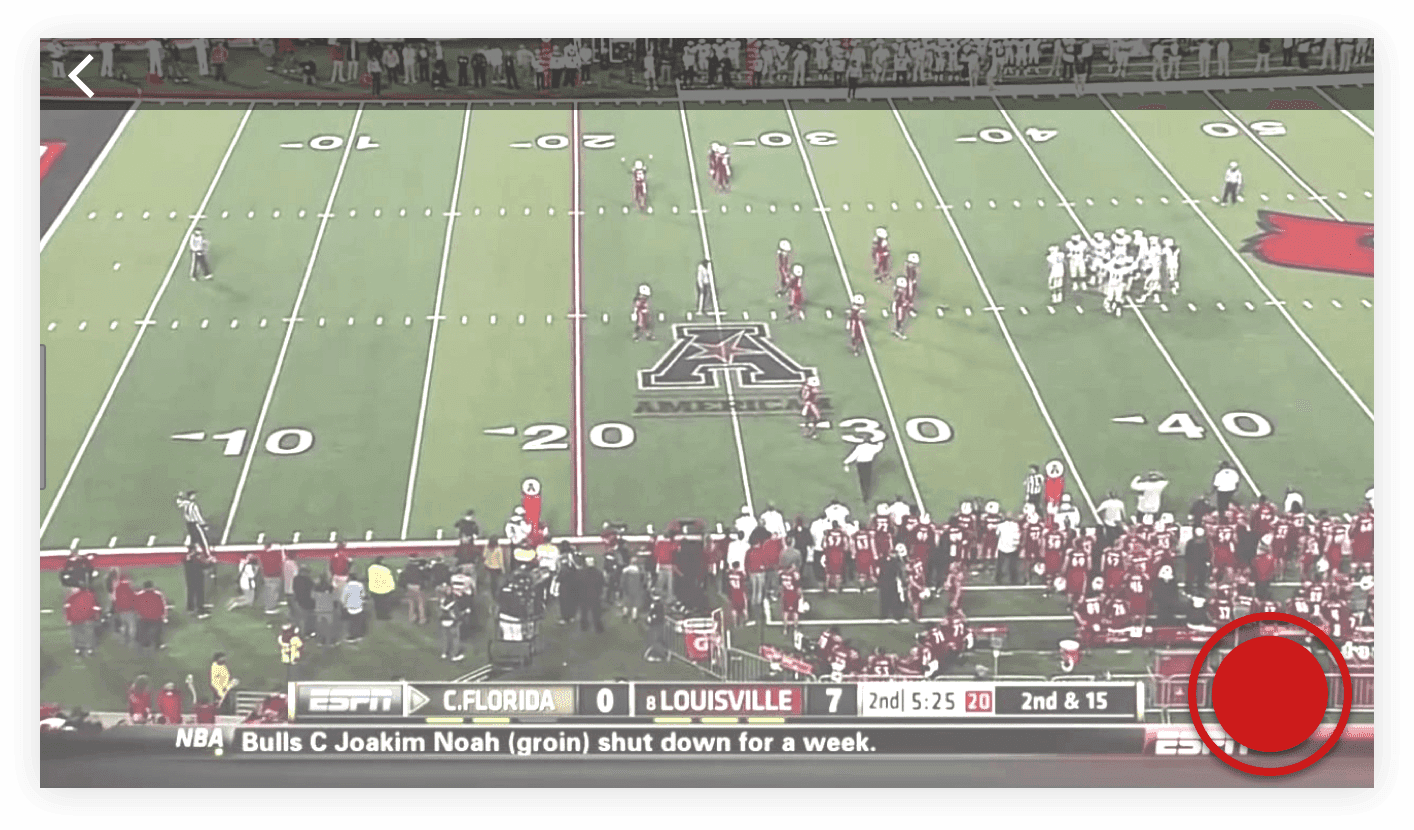
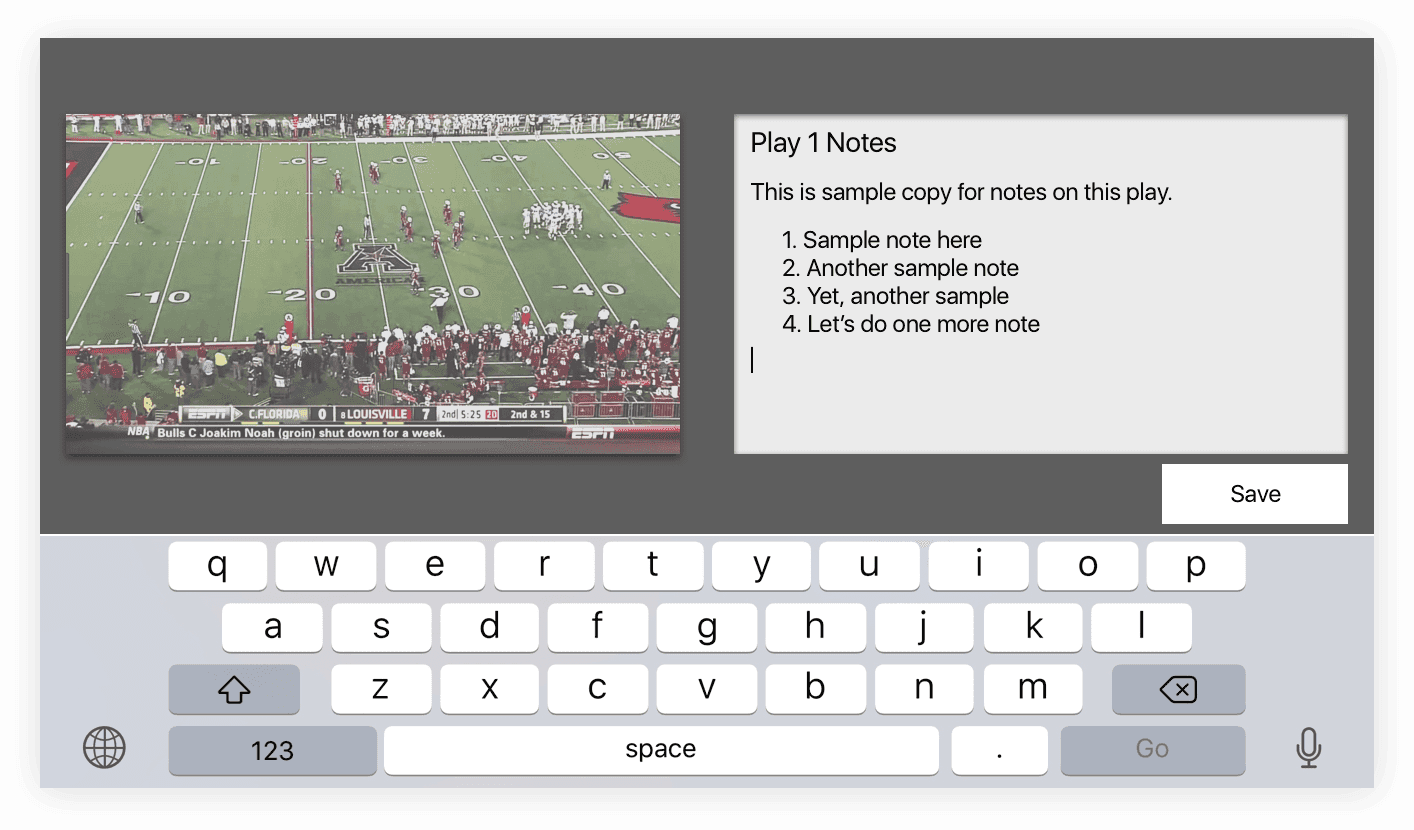
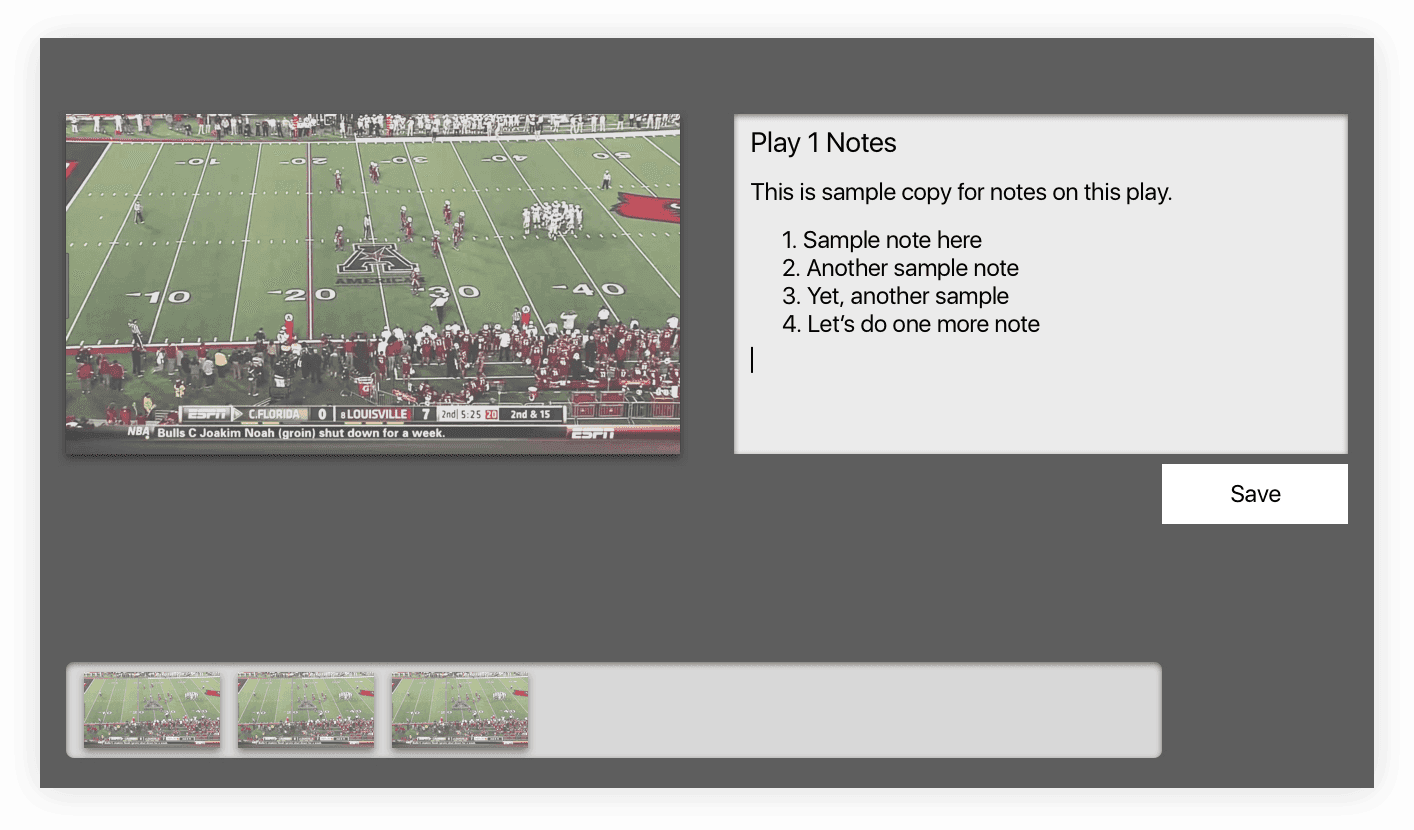
Before committing to a final design, I built a set of concept screens and put them in front of athletes to pressure-test the direction. The concepts explored how players would move through their daily film, study and annotate plays, follow an opponent week to week, and see what their teammates were watching. Testing them with players is what told me which ideas earned a place in the product.
The design
How it came together
I designed the app around the daily reality of a player's prep cycle rather than around a film library.
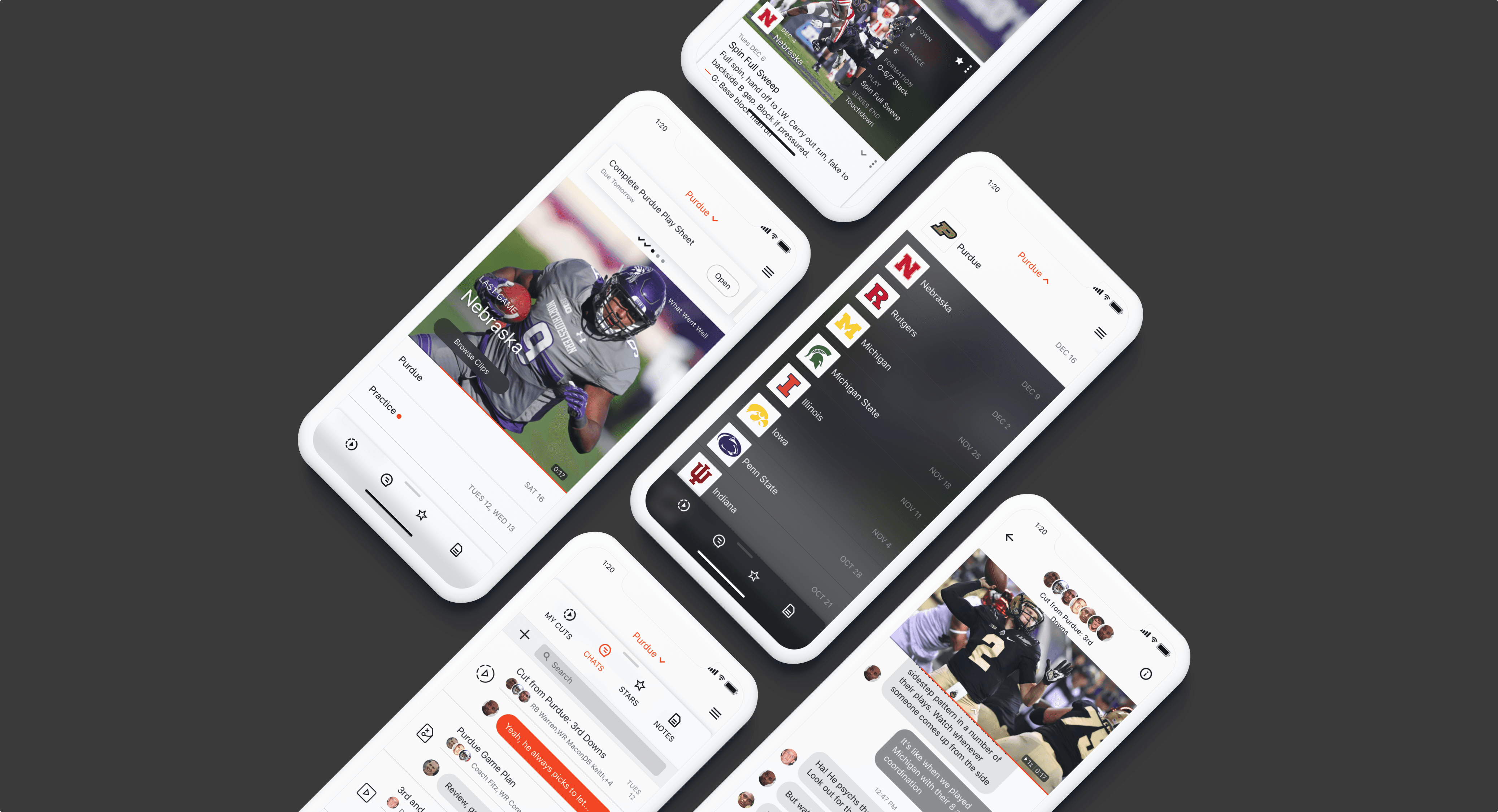
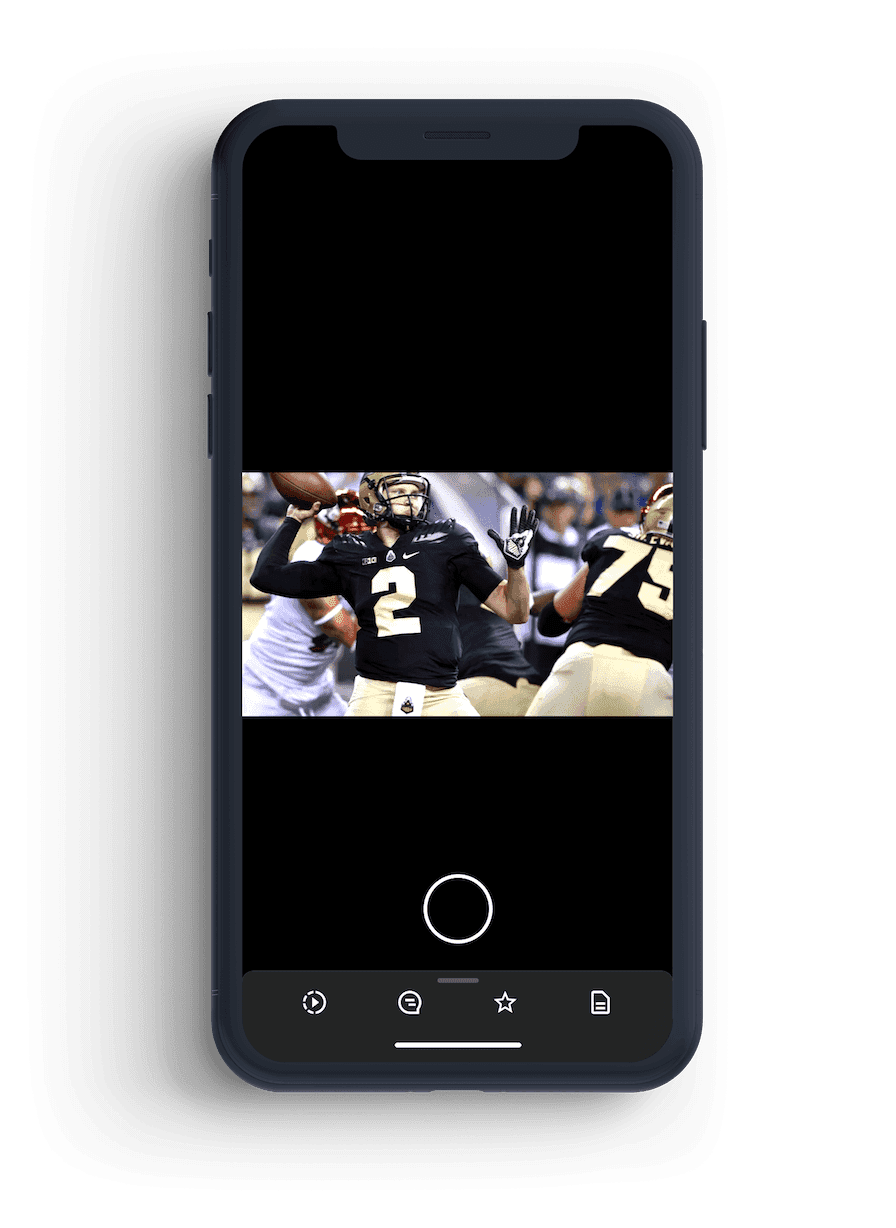
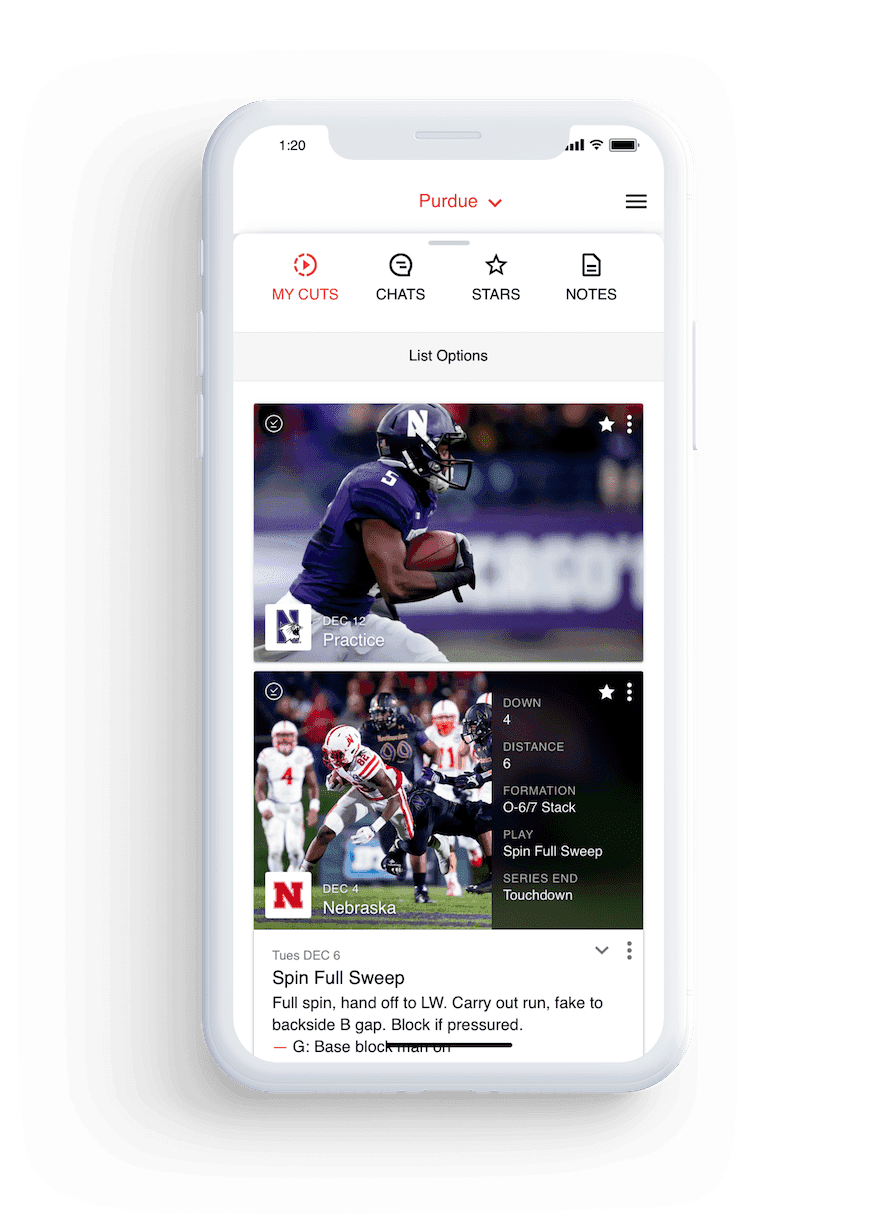
The core was a set of curated film sessions built for habit. A short daily scout blast gave players a five-minute, high-signal look at an opponent, low enough effort to do every day. Deeper film and scouting sat a layer below for players who wanted it, alongside highlights, lowlights, a personal clip library, and a hype reel that used film for priming and confidence rather than correction.
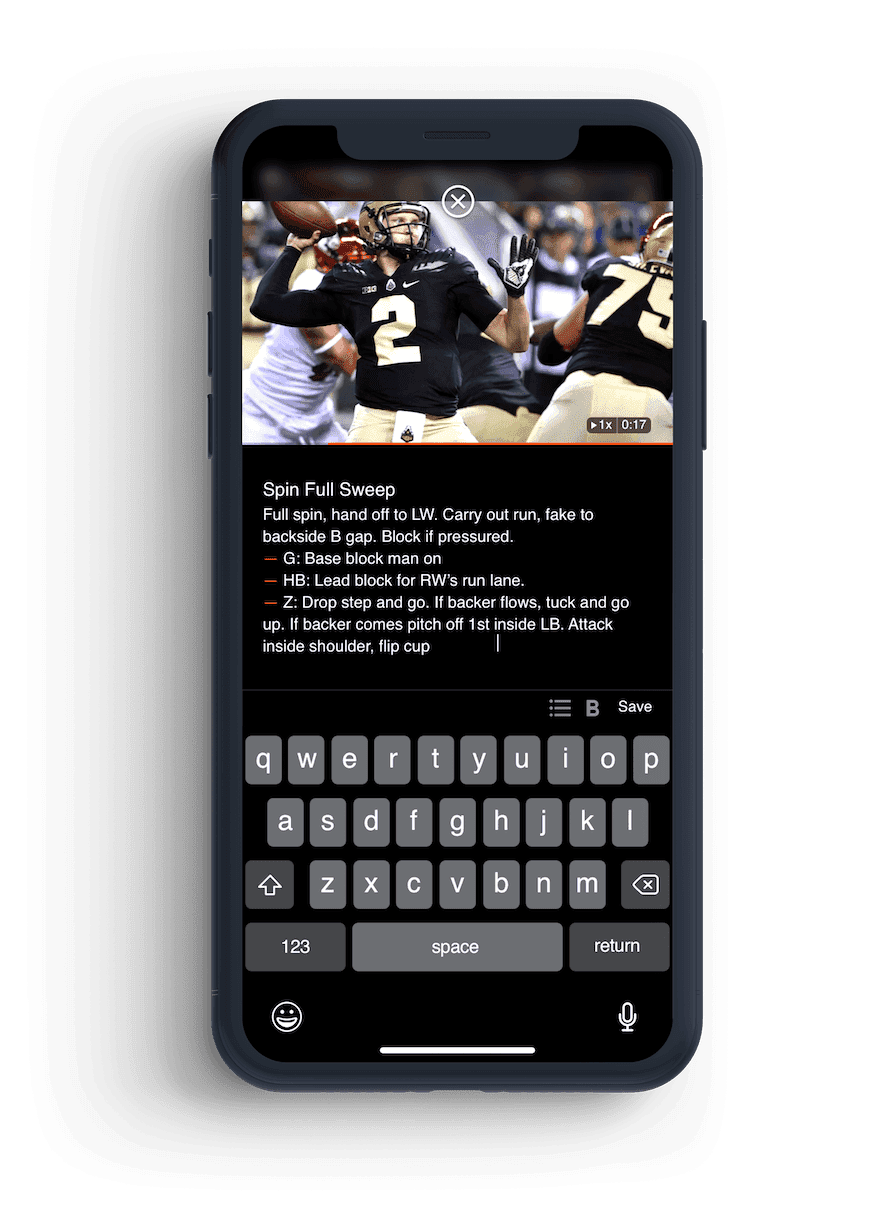
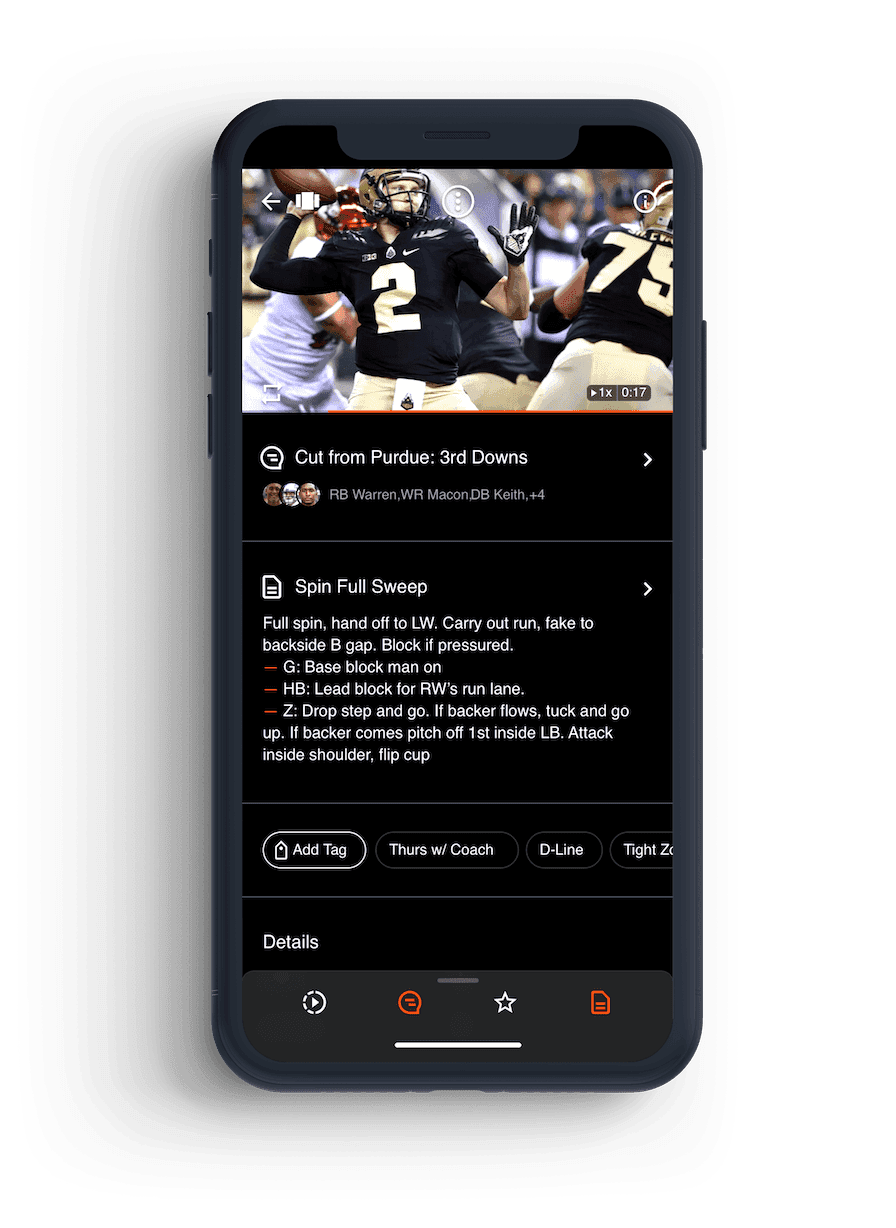
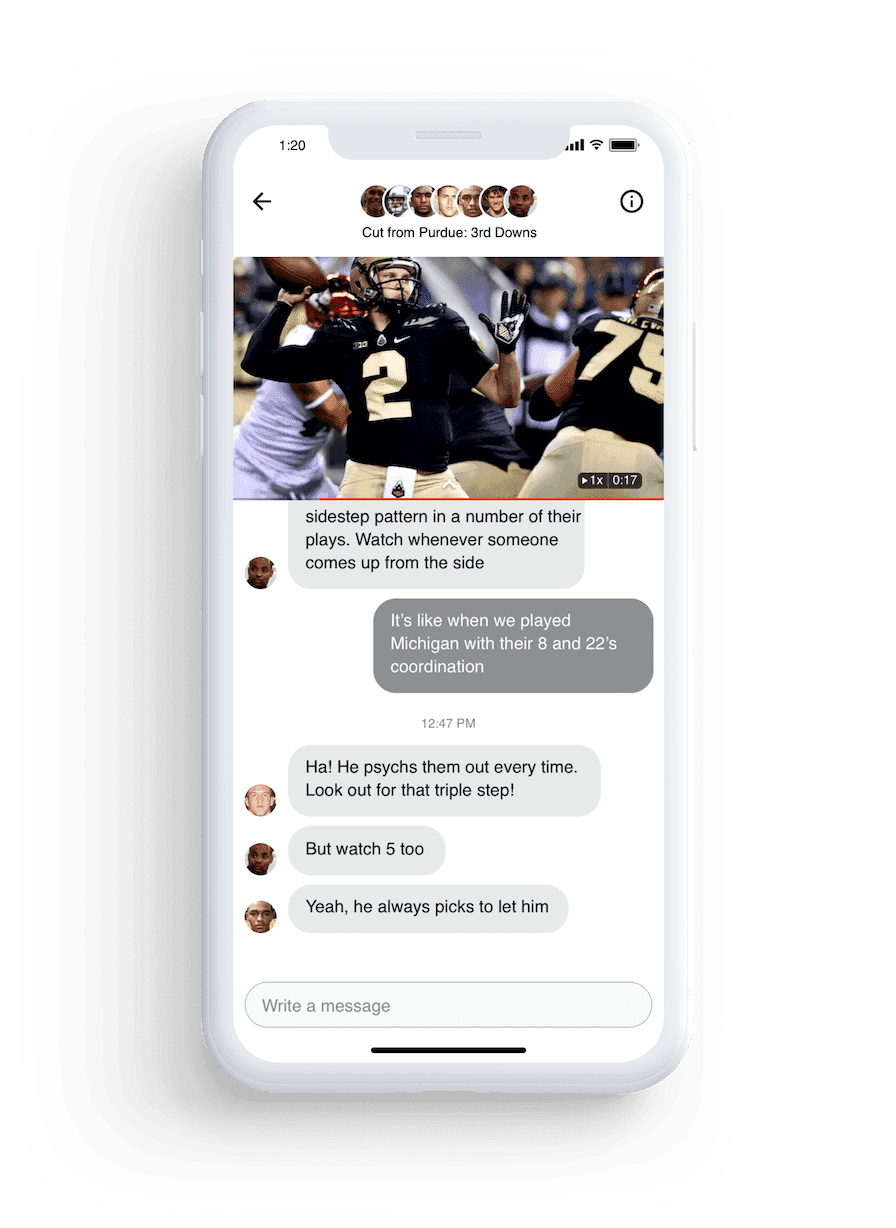
To build the analytic skill itself, I designed film around active study instead of passive watching. Players could cut and save their own clips, annotate plays with notes, and work through footage in a structured way that modeled how a coach breaks down a game, so the habit of analysis transferred to the player over time.
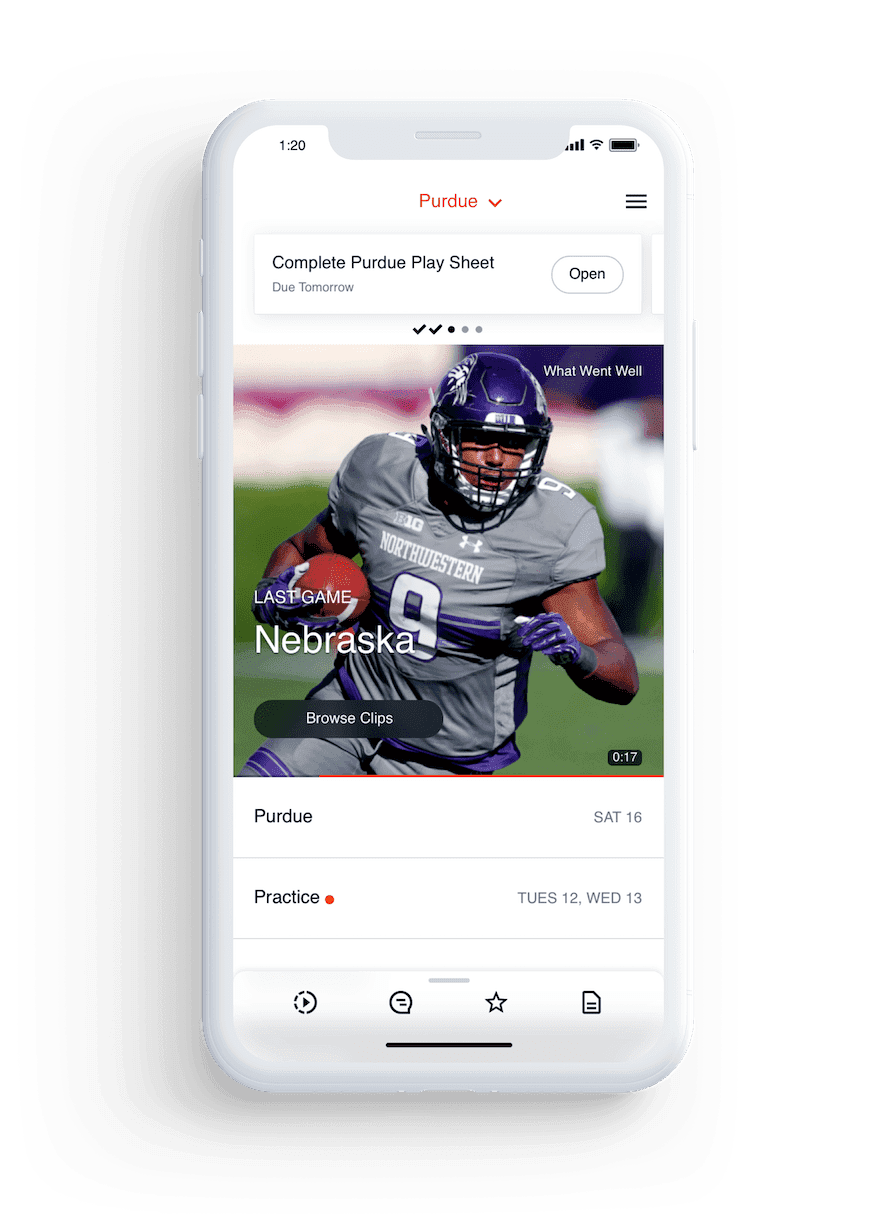
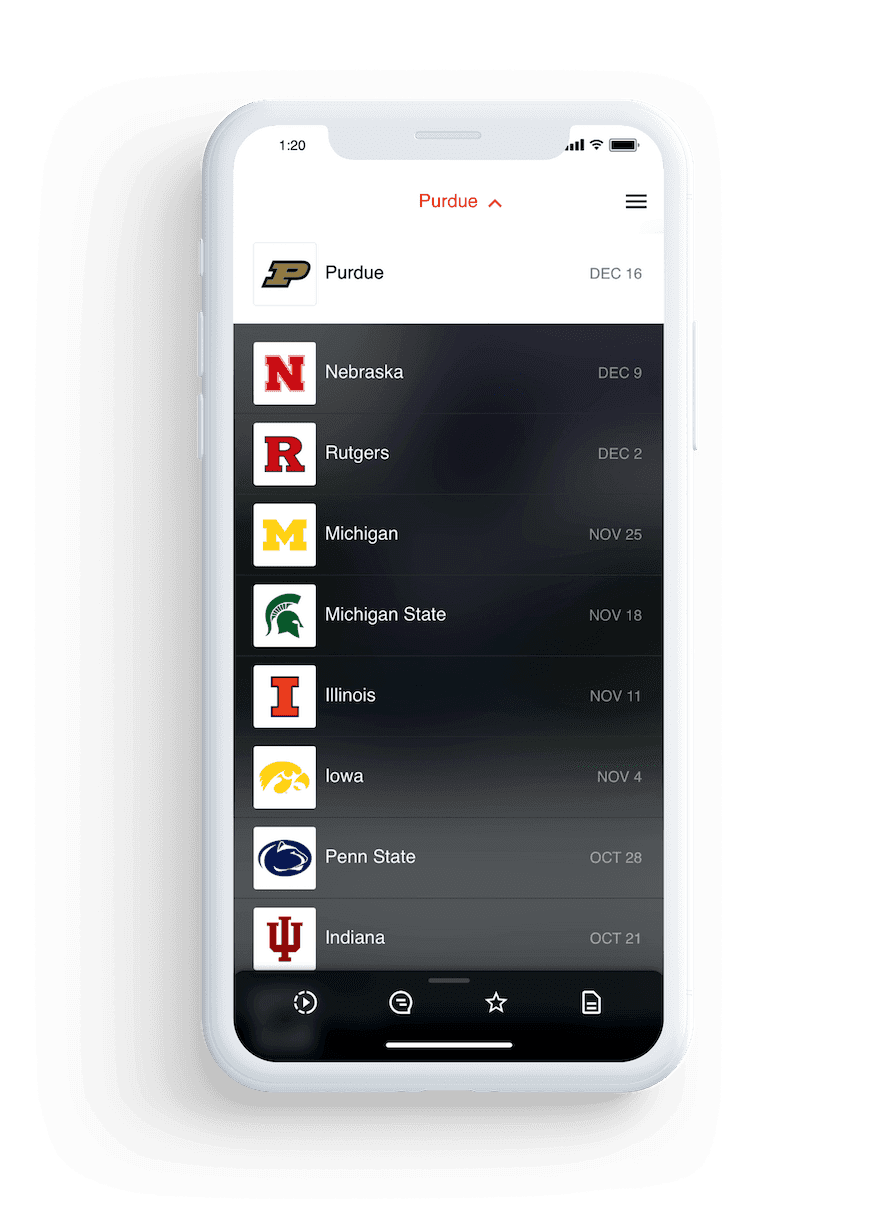
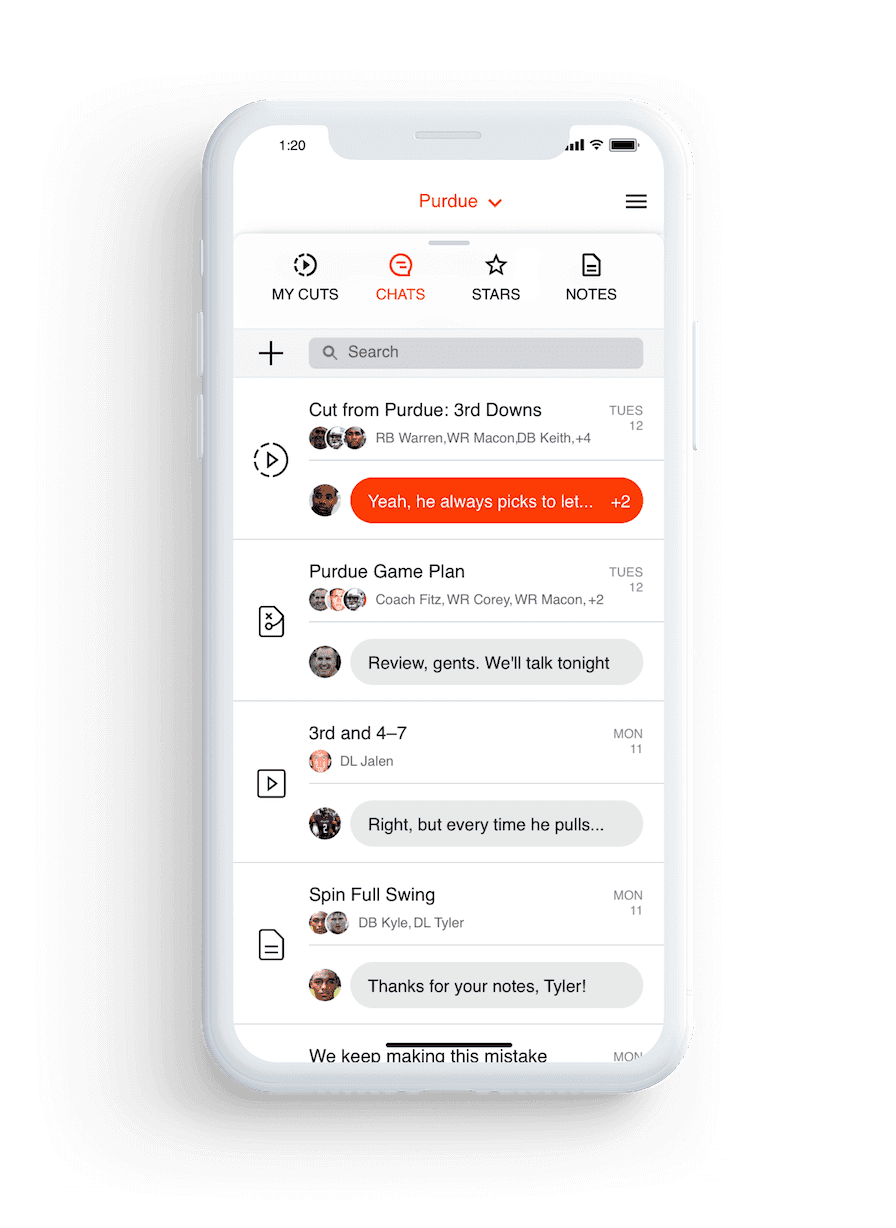
A messaging layer tied feedback directly to specific clips and plays, so a coach's note lived on the moment it referred to rather than in a separate conversation. The home of the app was organized around the opponent and the schedule, reinforcing the weekly reset of the preparation cycle. Each principle below resolved into a part of that product.
Design principles
Build the skill, do not just serve the film
I distilled the research into four principles, each a direct answer to something we learned, and each anchored to the reframe. Every principle resolved into a part of the product.
Principle 01
Make it second nature
Build players' Sport IQ by growing their ability to analyze, evaluate, and synthesize game situations on their own, in the language of their program's style of play. Learning is the point. Access is just the entry fee.
Principle 02
Bring the intel to the player
Make the moments that matter in film easy to find and easy to return to, so viewing becomes something a player does often and quickly rather than rarely and reluctantly.
Principle 03
Build routine and control
Set players' expectations and introduce regularity into a preparation cycle where the opponent, and therefore the work, changes every week.
Principle 04
Close the loop with the coach
Give coaches visibility into how players are preparing and progressing, so the trust between them has something concrete to stand on.
Outcome
The strongest decision in this project was not a screen. It was the reframe.
We delivered the final annotated designs to Catapult's product team to implement. They carried the work into their own applications and built against it on their existing design system.
Catapult came to us asking for a better way to access film. The reframe behind the work is what made it matter: the product was not designed to move film around, but to develop players' ability to read it on their own. That shift, from access to skill, ran through every decision in the design.