Password

CASE STUDY — FEDEX MOBILE STRATEGY

From app to mobile experience

Designing FedEx mobile for a world the app couldn't reach yet.

Role

Strategy and experience design. Led scenario and concept design.

Platform

Consumer mobile app

Domain

Shipping and delivery

Scope

Research, strategy, concept design

The brief was to define where FedEx Mobile should head over the next three to five years, accounting for a fast-moving mobile landscape and a shifting set of user expectations. Polishing screens inside the existing app would not get FedEx there. People were already learning, everywhere else in their lives, that a good mobile experience reaches them where they are. It does not wait for them to open an app.


So we reframed the work around the entire mobile experience, not the app alone, and built a strategy the team could prioritize against.

The brief was to define where FedEx Mobile should head over the next three to five years, accounting for a fast-moving mobile landscape and a shifting set of user expectations. Polishing screens inside the existing app would not get FedEx there. People were already learning, everywhere else in their lives, that a good mobile experience reaches them where they are. It does not wait for them to open an app.


So we reframed the work around the entire mobile experience, not the app alone, and built a strategy the team could prioritize against.

FedEx asked for a stronger app. We argued the app was the wrong unit of design.

STRATEGIC INTENT

Don't evolve the app, reimagine the experience

The current app did its job. It let people track packages, create labels, find locations. But it asked the user to come to it, every time, for every task, on one device, in a world that had stopped working that way.

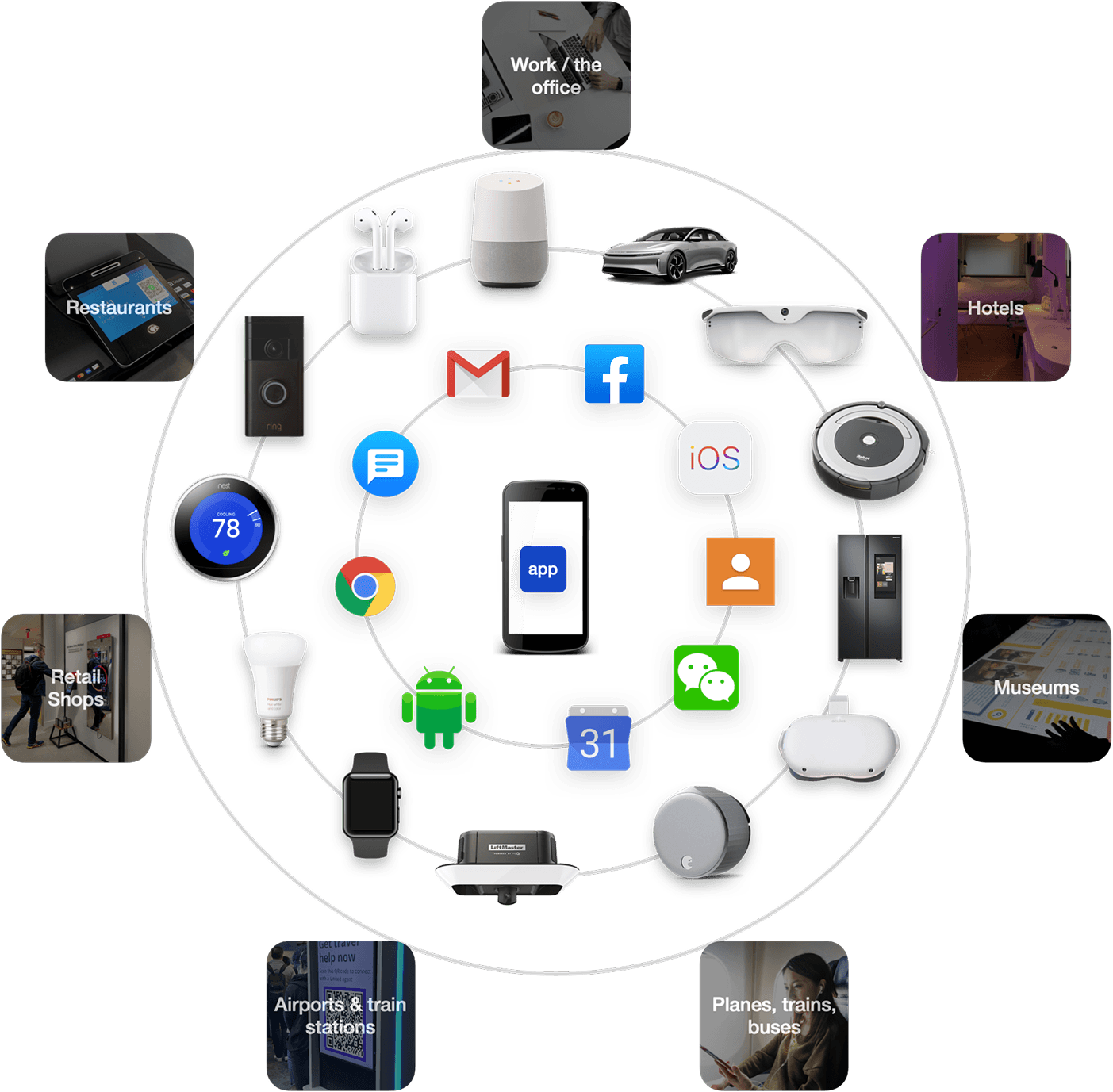
The expectations FedEx needed to meet were being set elsewhere. By apps that surfaced their functionality across the OS. By ecosystems that handed a task from phone to watch to car without a seam. By physical spaces that quietly used the devices already in a customer's pocket.

It's not enough to evolve the current app. We need to reimagine the entire FedEx mobile experience.

From
To

Isolated apps that accomplish siloed tasks

Integrated experiences that accomplish connected tasks

A single device for the vast majority of interactions

An ecosystem of interconnected devices

Static environments with low digital engagement

Environments that engage users through the devices they already carry
Approach

Living in the future

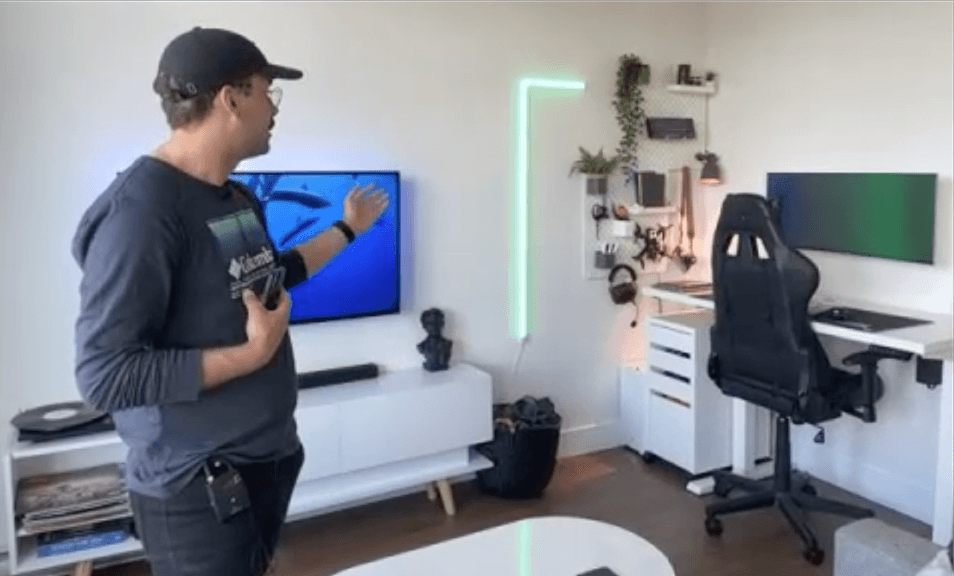
A strategy about the next five years is only as good as its evidence, and most of that evidence does not exist in a survey yet. So rather than only ask people what they wanted, we went and lived in the future that was already here in pieces.
Immersions

Immersions

Immersions

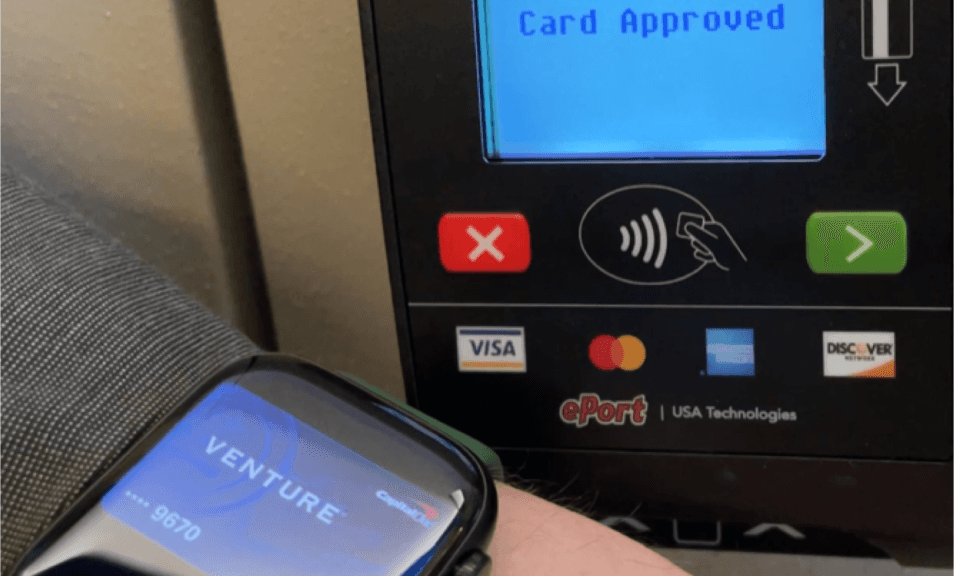
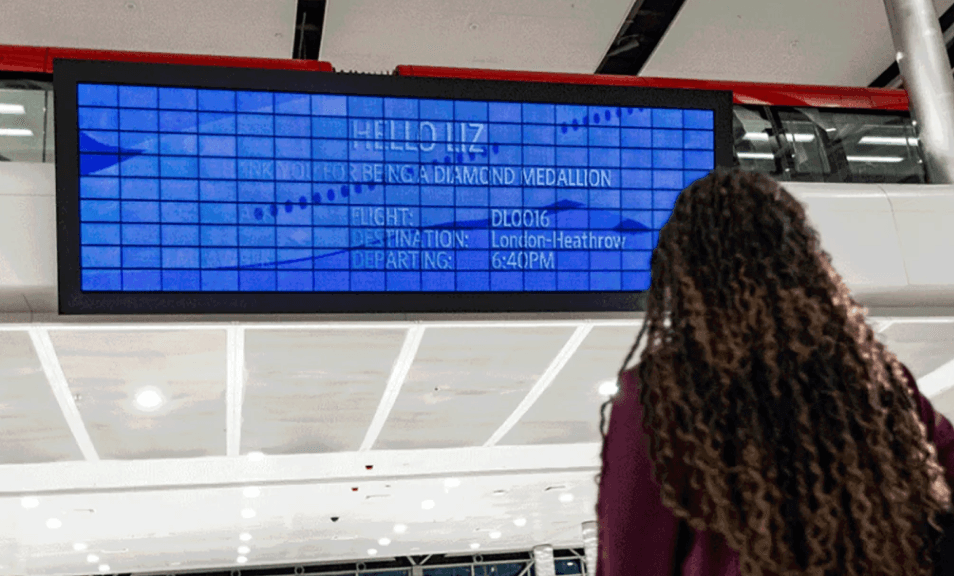
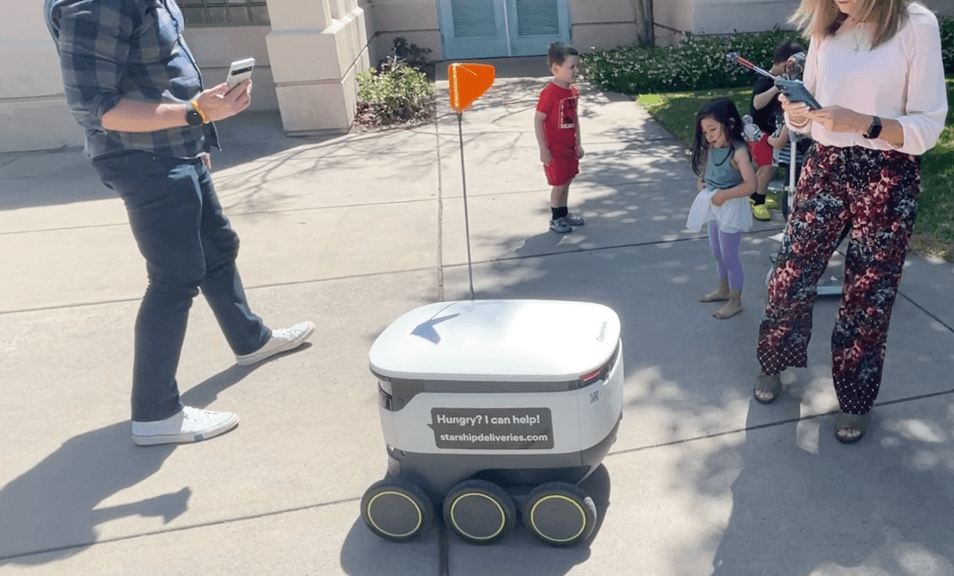
We used experiences that already behaved the way FedEx mobile should. Palm-scan payment, walking out of a store without a checkout, running a hotel stay from one app, a fitting room that felt like magic because it hid all its complexity.

We used experiences that already behaved the way FedEx mobile should. Palm-scan payment, walking out of a store without a checkout, running a hotel stay from one app, a fitting room that felt like magic because it hid all its complexity.

Platform shifts

Platform shifts

Platform shifts

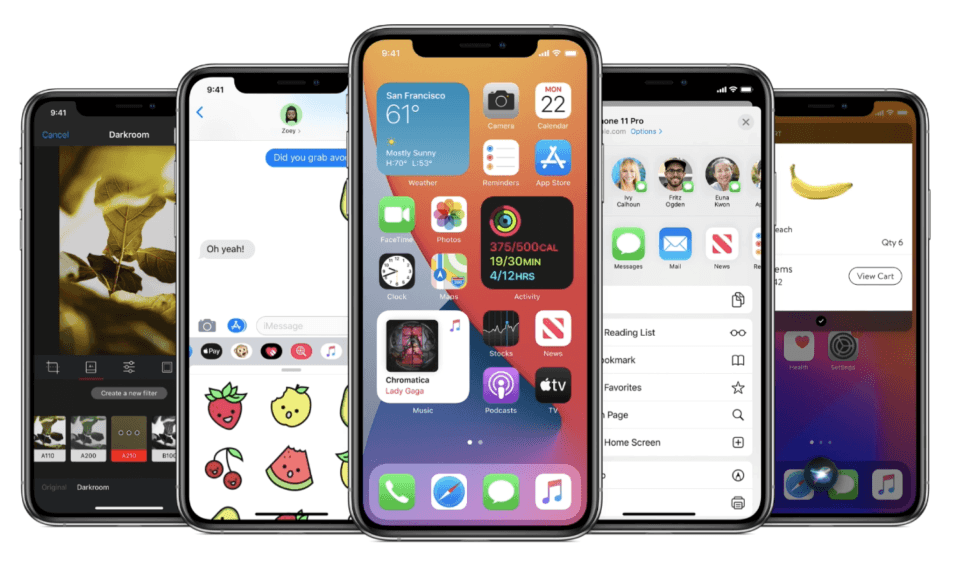
We tracked the near-term OS changes that would make this buildable. Lock screen widgets, Live Activities, App Intents.

We tracked the near-term OS changes that would make this buildable. Lock screen widgets, Live Activities, App Intents.

Extreme users

Extreme users

Extreme users

We sat with people who had already built the future, including smart home hackers who had spent years wiring their homes to behave intelligently.

We sat with people who had already built the future, including smart home hackers who had spent years wiring their homes to behave intelligently.

I don't want to open a carrier's app. I want the carrier's information in the app I'm already in.

Smart home hacker, research participant

Smart home hacker, research participant

GUIDING PRINCIPLES

Three principles

The research pointed consistently in three directions. We made them the spine of the strategy: an insight about where behavior was heading, and a clear instruction for what FedEx should design.

01

Integrate functionality

Integrate functionality

Integrate functionality

INSIGHT

Brands embed their capabilities into other apps and across the OS, creating shortcuts that meet people where they already are. That matters most for an app you don't open often or stay in long, which describes shipping for most people.

Brands embed their capabilities into other apps and across the OS, creating shortcuts that meet people where they already are. That matters most for an app you don't open often or stay in long, which describes shipping for most people.

Do

Break out of the app. Bring FedEx functionality to the whole device through widgets, OS extensions, app intents, and shortcuts, so it shows up the moment it's useful.

Break out of the app. Bring FedEx functionality to the whole device through widgets, OS extensions, app intents, and shortcuts, so it shows up the moment it's useful.

02

Orchestrate handoffs

Orchestrate handoffs

Orchestrate handoffs

INSIGHT

As people adopt more personal devices, phone to watch to glasses, they expect to move between them without friction, based on context and on which device is right for the task.

As people adopt more personal devices, phone to watch to glasses, they expect to move between them without friction, based on context and on which device is right for the task.

Do

Design experiences that pass cleanly between devices and let each one do what it's best at, instead of forcing everything through the phone.

Design experiences that pass cleanly between devices and let each one do what it's best at, instead of forcing everything through the phone.

03

Harness users' devices

Harness users' devices

Harness users' devices

INSIGHT

Built environments are getting smarter, and the scalable way to do that isn't expensive in-store hardware. It's the device the customer already brought. It only works when the complexity is hidden.

Built environments are getting smarter, and the scalable way to do that isn't expensive in-store hardware. It's the device the customer already brought. It only works when the complexity is hidden.

Do

Partner with retail teams to build in-store experiences powered by the customer's own devices, easing the labor and staffing pressure the retail network already felt.

Partner with retail teams to build in-store experiences powered by the customer's own devices, easing the labor and staffing pressure the retail network already felt.

Scenario

One shipment, all three principles

To make the principles undeniable, I built a single end to end story that puts all three in motion. A birthday gift travels from a shipper, Payal, to a recipient, Min Ji. An experience that goes beyond the traditional app screen.

Act One — The shipper
01

Payal asks for Min Ji's address and starts a shipment by tapping the address right in her messages.

02

Her smart scale and AR glasses help her pick the right box size, pay, and create a label.
03

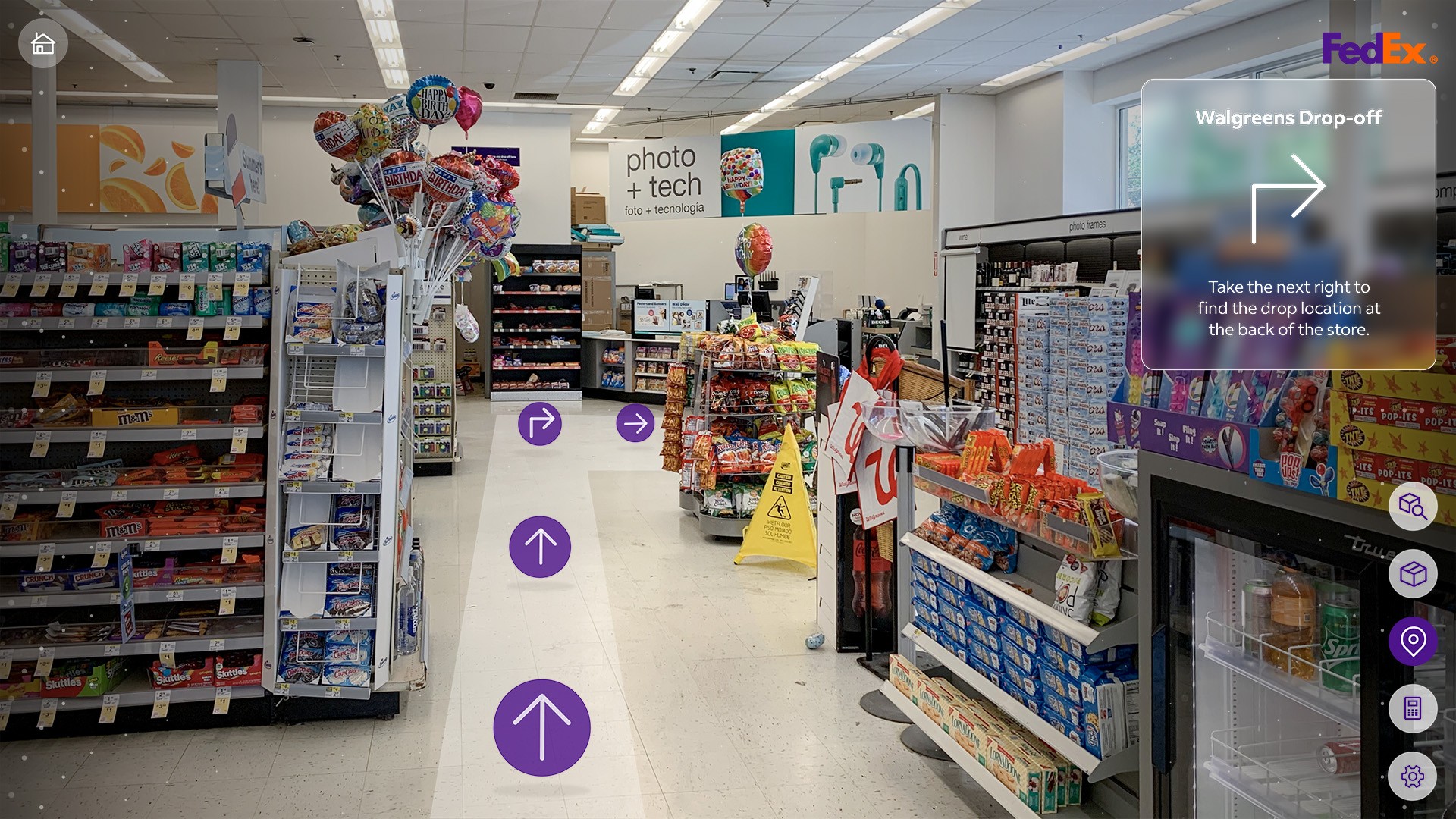
The app prompts her to the nearest drop-off, and her glasses guide her to the spot inside the store.

04

Once it's scanned, a glance-level notification confirms the gift is on its way.

Act Two — The recipient
05

Min Ji gets a notification that Payal’s package is on its way. Min Ji pins a tracking widget to her lock screen, no setup required.

06

Plans change. She heads to dinner. The app detects she's away and offers a reroute, which she dismisses so the gift waits at home.
07

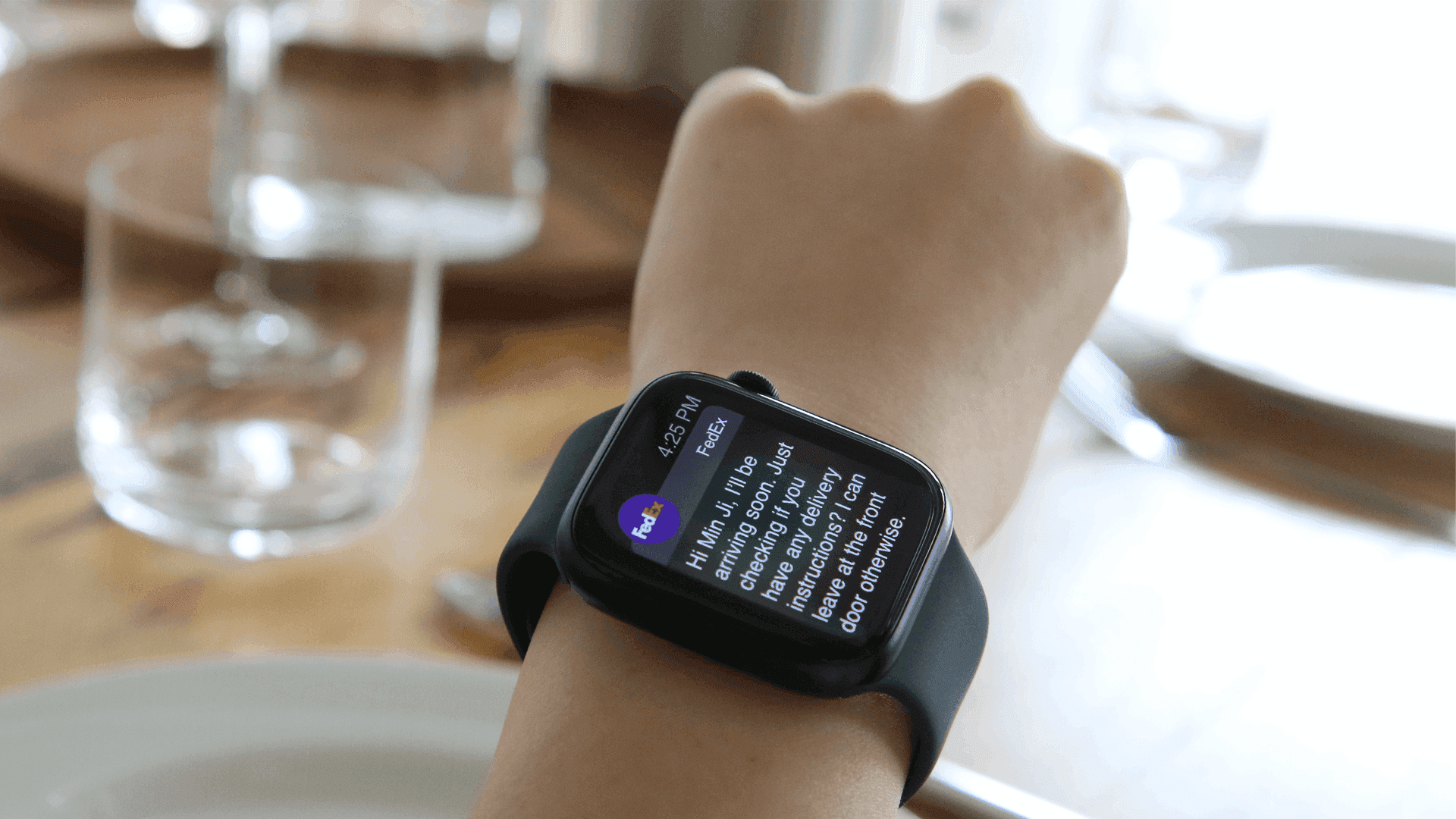
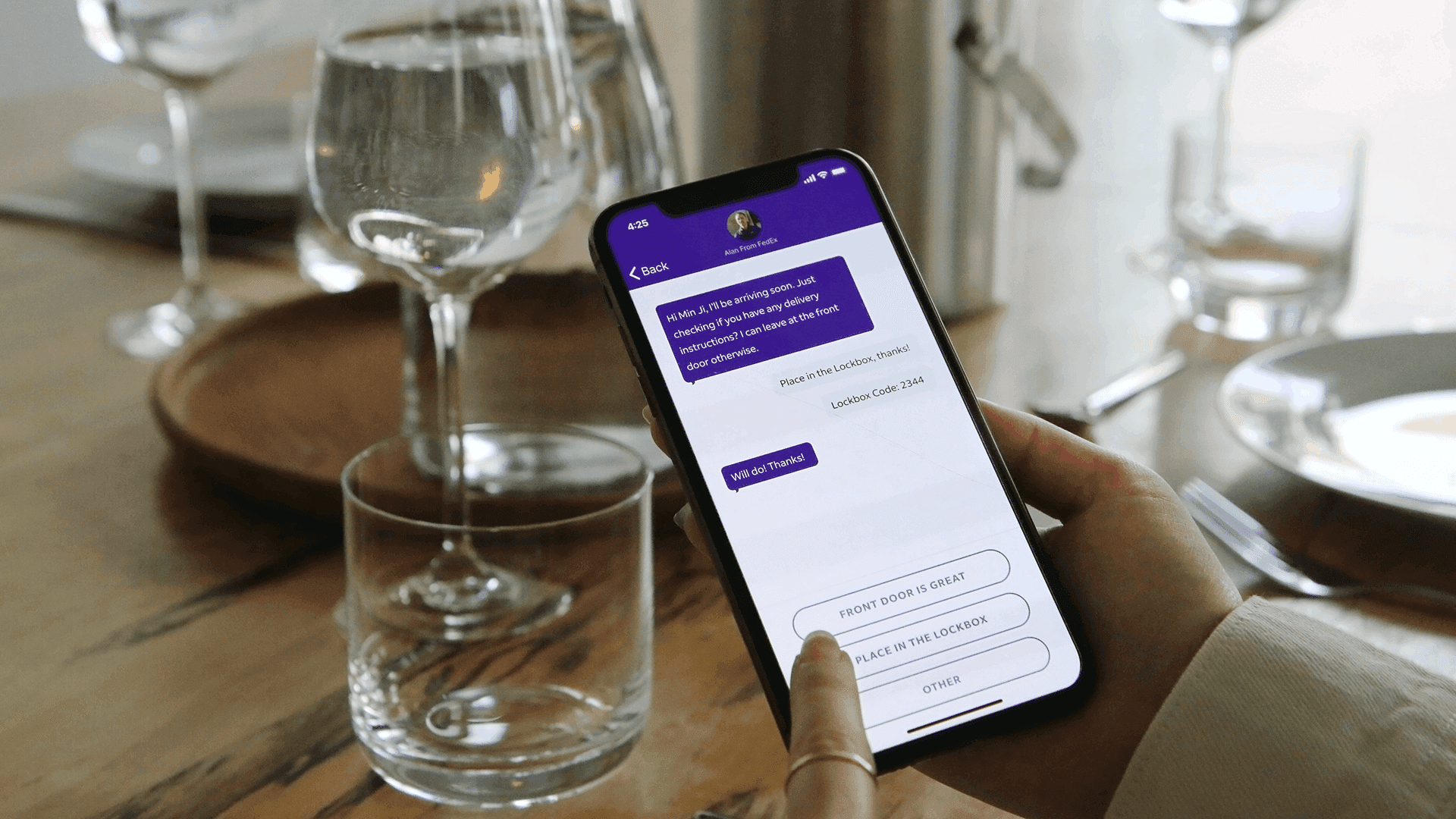
At the restaurant, Min Ji’s watch gets a notification that the courier is arriving at her doorstep. She taps Reply to answer directly via the FedEx app.
08

She tells the courier to use the lockbox and shares the unlock code.

09

When a signature is needed, she authenticates with Face ID and signs from the table.
10

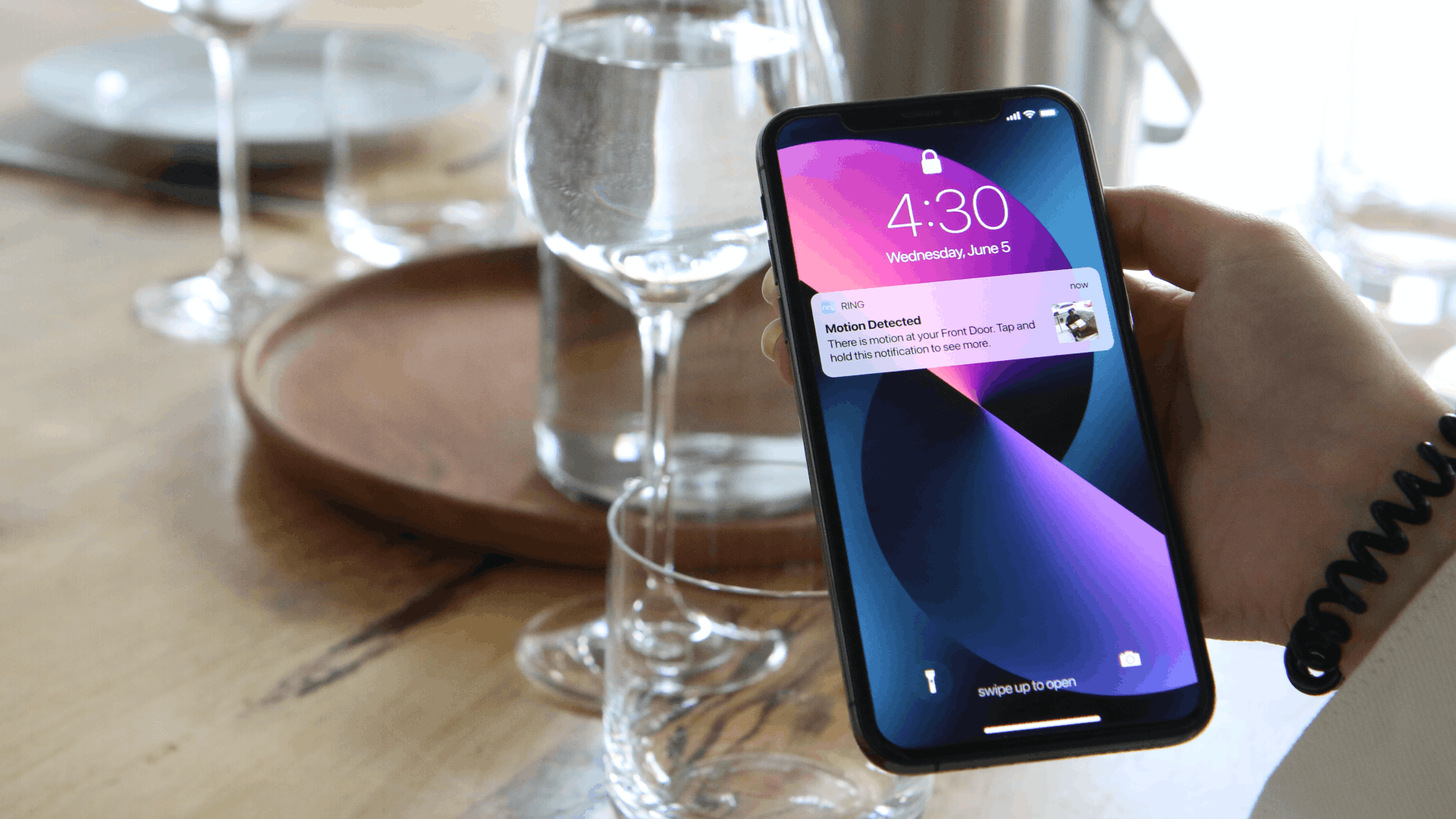
Min Ji’s Ring home security system detects motion and prompts her to view security footage. She is relieved to see that the courier secured the package in the lockbox.

11

Her Ring camera confirms the package is secured in the lockbox.

12

Her FedEx app sends a delivery confirmation that includes a custom message. She taps it and sees a fun celebratory animation that Payal included with the shipment.

STRATEGY ACTIVATION

Five moves to make today

We handed FedEx more than a vision. We handed them a plan to run it. The reframe gave the team a shared language, the principles gave them a test for every decision, and to put it in motion we defined five moves to start now.

Research

Research and evaluate new tech and devices

Research and evaluate new tech and devices

Get smart on emerging tech and where it shows up in real life, and find the openings it creates in FedEx journeys.

Organization

Reinforce the org structure for innovation

Reinforce the org structure for innovation

Socialize the vision and earn buy-in at every level, so the right structures and sponsors are in place from the start.

Partnerships

Explore internal and external partnerships

Explore internal and external partnerships

Build support across FedEx teams and outside the company, from legal and infosec to smart-device makers.

Team

Equip the team with the right skills

Equip the team with the right skills

Name the capability gaps clearly enough to fund the training, research, and new roles the work demands.

Development

Build a fully integrated experience

Build a fully integrated experience

Ship the high-impact integrations and connected-device ecosystems in an organized development environment.

Say hello

Learn more about me or connect with me below.

Say hello

Learn more about me or connect with me below.

Say hello

Learn more about me or connect with me below.

Say hello

Learn more about me or connect with me below.