Password
Case study
Providence
A financial experience patients could trust
Role
Product designer
Team
IA Collaborative, for Providence
Product
Consumer healthcare, patient-facing web
Focus
User research, strategy, concept design
Providence, a large US health system, wanted to rethink how it engages patients around the cost of their care. Medical bills tend to arrive late, read like a foreign language, and show up at the most stressful possible moment. Providence asked us to validate a new financial engagement model: a digital experience that would help patients understand what they owe, plan for it, and feel supported rather than cornered.
I was the product designer on the engagement and had a hand in every phase. I led the design research artifacts and their iterations, focused the benchmarking on transparency, payment experiences, and trust, and worked through the synthesis that produced our strategic framework. The vision tested well enough that Providence brought the team back for follow-on engagements to blueprint and prototype it.
01 — THE PROBLEM
Built for the institution, not the patient
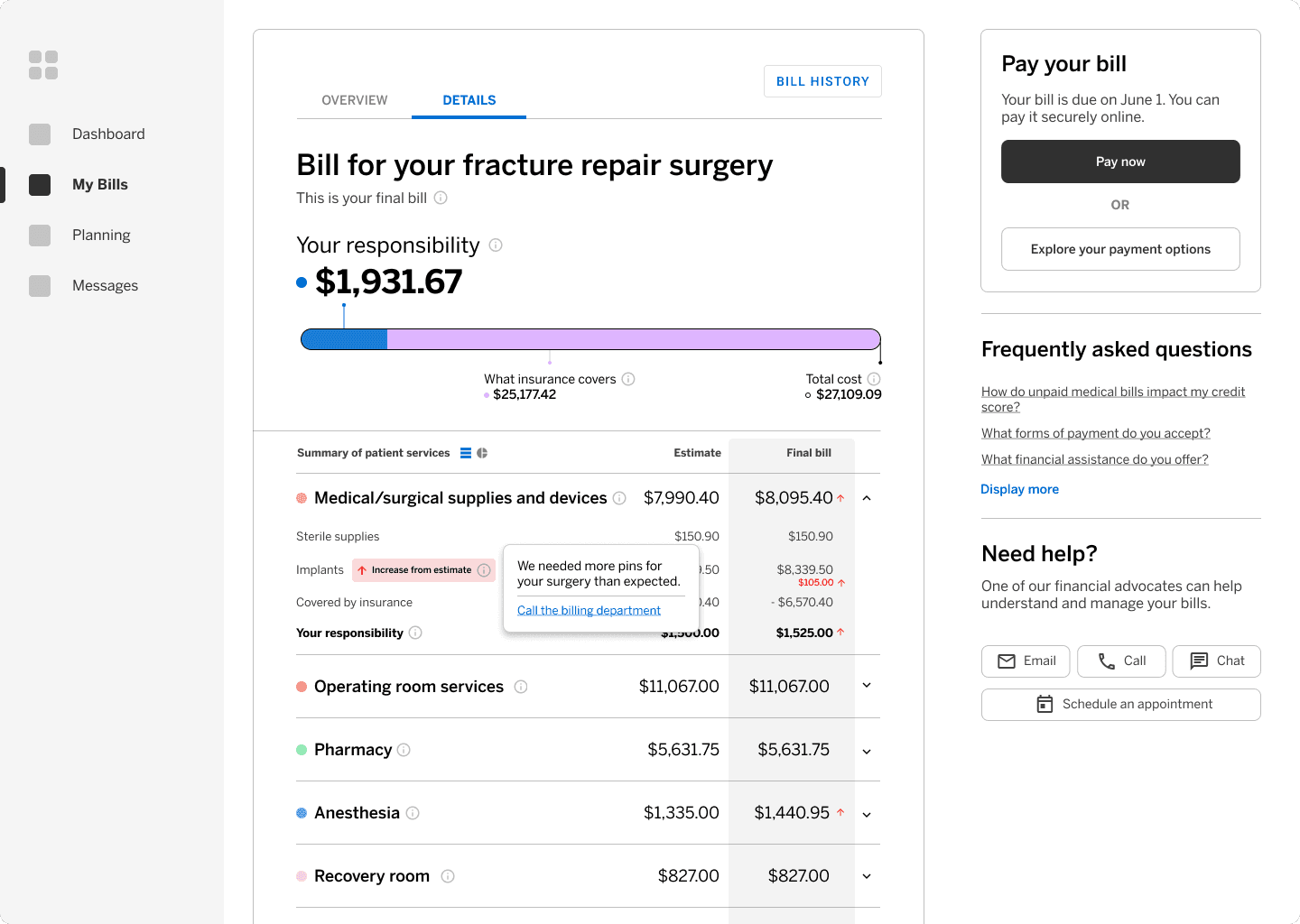
For most people, a medical bill is not a transaction. It is a source of dread. In our research, patients described opening bills they could not decipher, getting surprise charges from third parties they had never heard of, and avoiding payment entirely because calling in to explain their situation felt humiliating.
The financial side of healthcare had been built for the institution, not the patient. The opportunity was to design the opposite. An experience that treated the patient as a person, earned their trust before asking for anything, and gave them enough understanding to make real decisions.
02 — BENCHMARKING
What good looks like
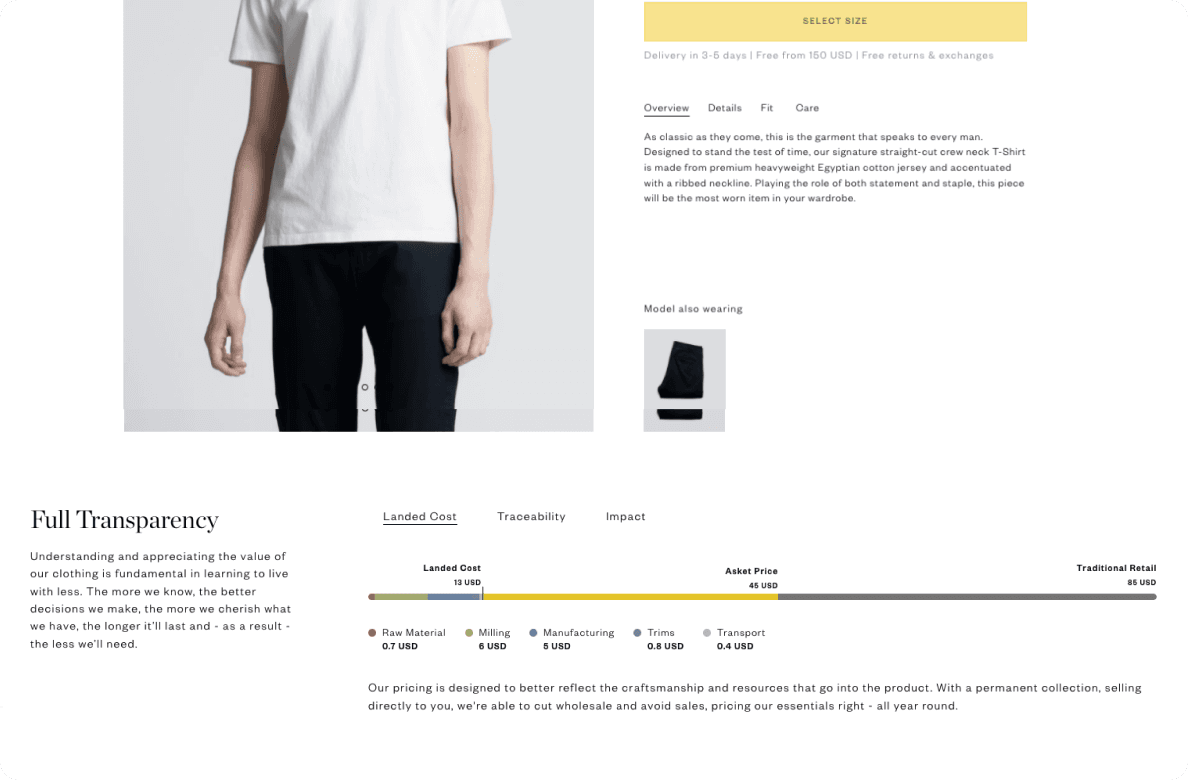
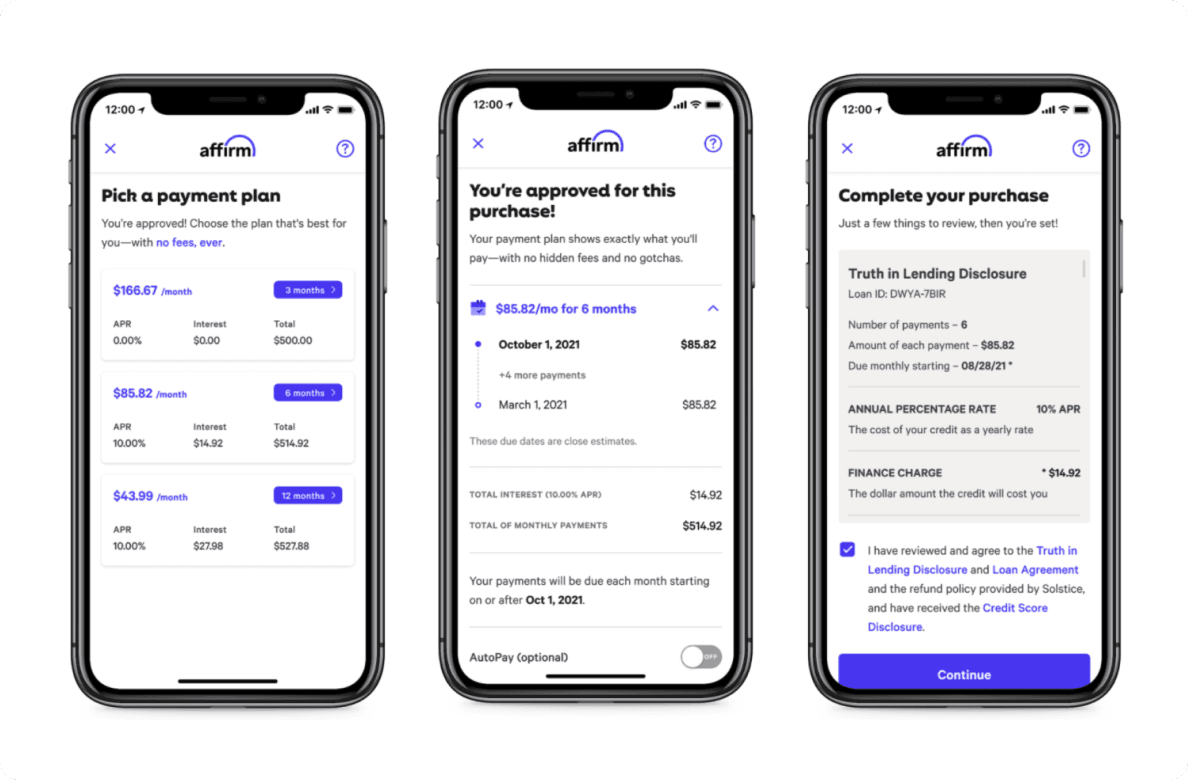
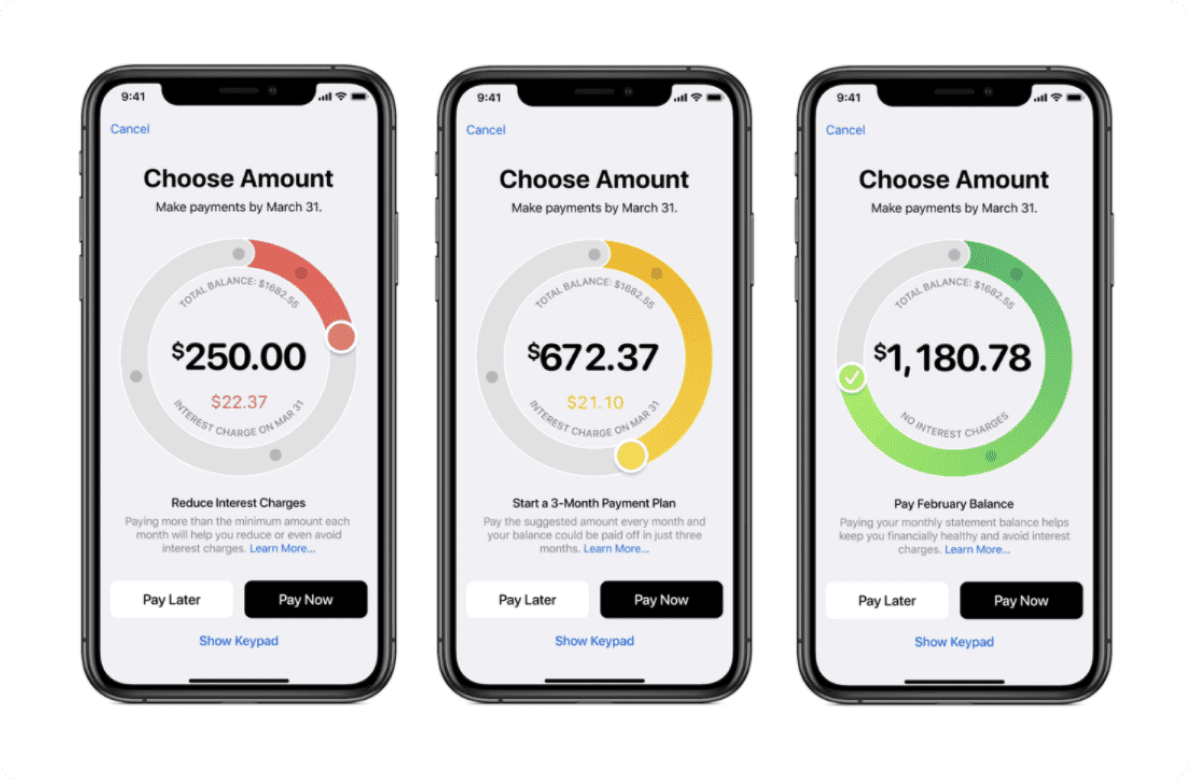
Before we talked to patients, I spent the early weeks studying experiences that already get this right, inside and outside healthcare. I focused on three questions, and the teardowns gave us a shared bar to aim at and shaped the concepts we would test. The recurring lesson: transparency on its own is not enough. Numbers without context just create a new kind of anxiety.
03 — RESEARCH APPROACH
Two iterative rounds, 20 sessions
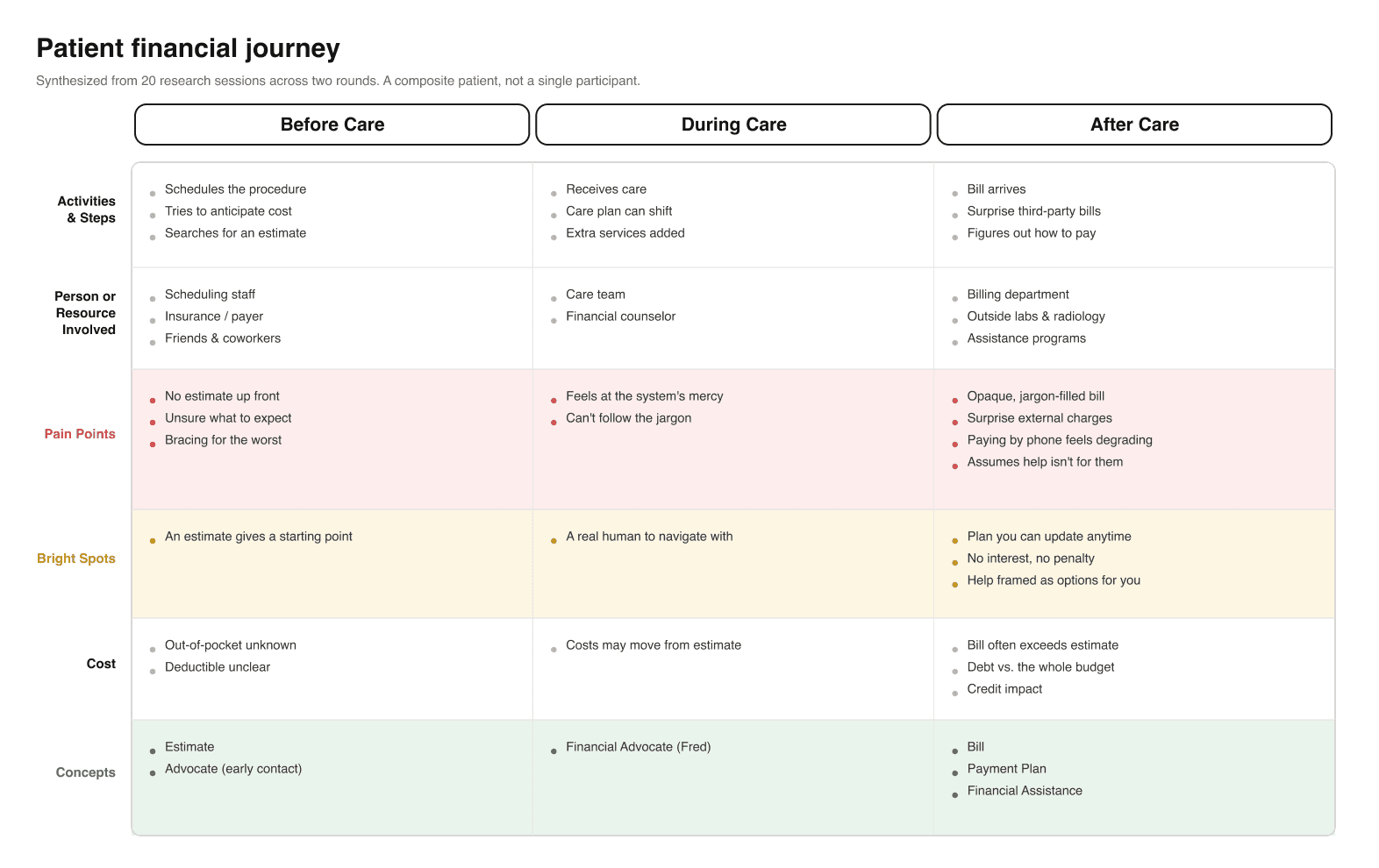
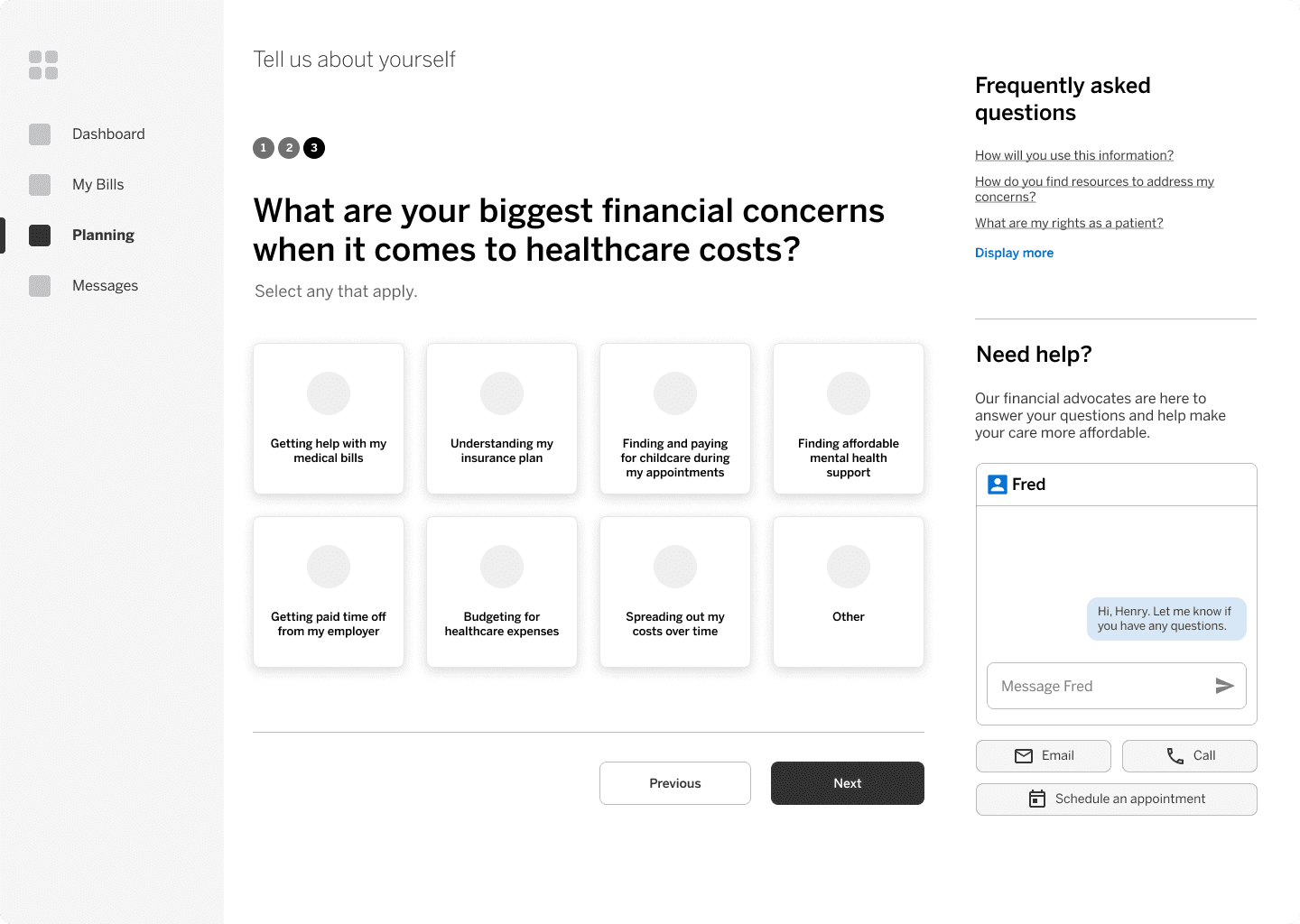
We ran the work as two iterative rounds with patients who had recently been through a significant medical event and the unplanned cost that came with it. Each session paired journey mapping, to capture the emotional inflection points and the moments people gave up, with concept reactions to specific designs.
01
Insurance type
HMO to HDHP, plus uninsured.
02
Coverage source
Employer, exchange, Medicare, Medicaid.
03
Literacy
A spread of financial and insurance fluency.
04
Demographics
A deliberate mix across regions and backgrounds.
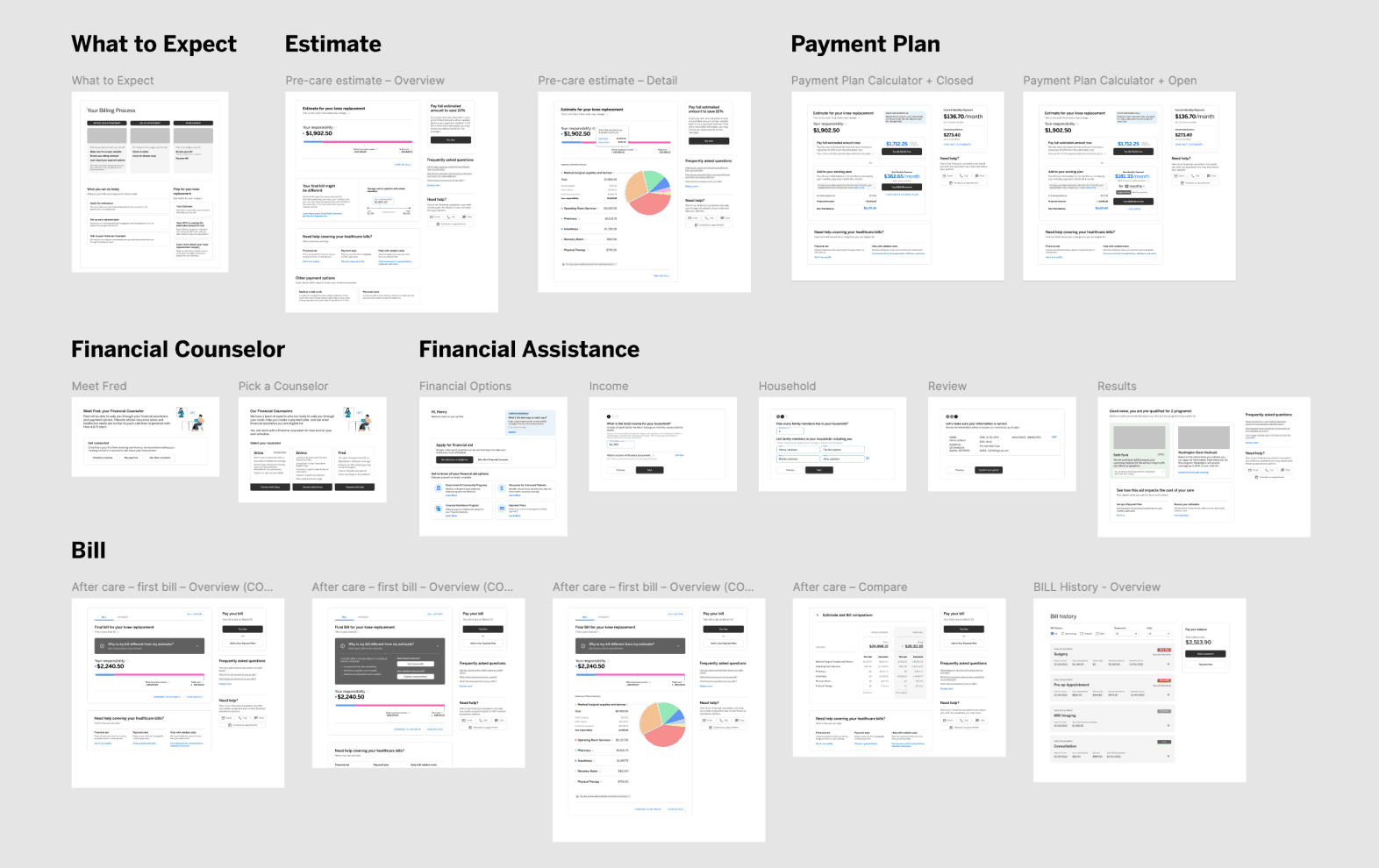
Those concepts were the heart of the method, and building them was my main contribution. You cannot validate a financial engagement model by handing people a strategy document. I designed and iterated the stimuli into five concepts, then reworked them between rounds so round two tested a sharper version rather than the same prompts twice.
04 — SYNTHESIS AND THE GUIDING PRINCIPLES
Not a billing problem, a trust problem
Across 20 sessions, the patterns were consistent enough to build a framework on. I was deep in the synthesis, and the direction we landed on reframed the whole problem.
In order to empower patients to stay on track with their healthcare finances, we must create a financial engagement model that treats patients as individuals, proves we are on their side, and builds them a seat at the table.
Principle 01
Treat me as an individual
Recognize and serve the patient's whole situation, not just their balance.
Principle 02
Prove you're on my side
Be the partner who guides patients through a deliberately confusing system.
Principle 03
Build me a seat at the table
Give patients the knowledge to take control instead of being handled.
05 — THE CONCEPTS
Each principle, made concrete
The five concepts together formed the testable model. Each one carried a piece of the vision into something a patient could actually use.
PROVE YOU'RE ON MY SIDE
Financial Advocate
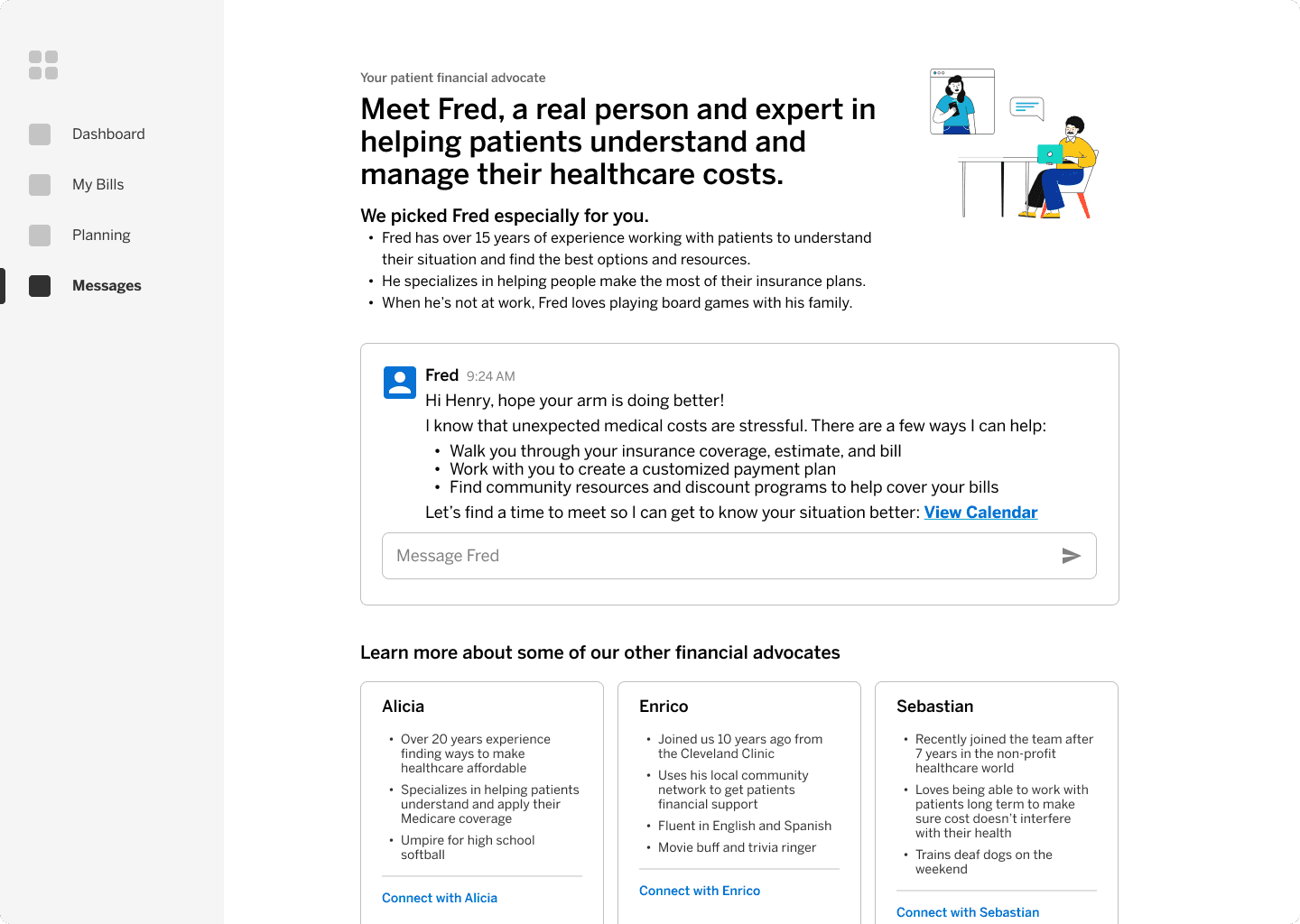
Patients wanted a human being to navigate the system with them. We designed the advocate as a named, credentialed person, Fred, with real tenure and a short profile, alongside other advocates a patient could browse. We made a deliberate point of stating that advocates are real people and that automated touchpoints are not pretending to be. Asked what would reassure them the advocate was a person, one participant simply wanted it spelled out: a human, not AI.
BUILD ME A SEAT AT THE TABLE
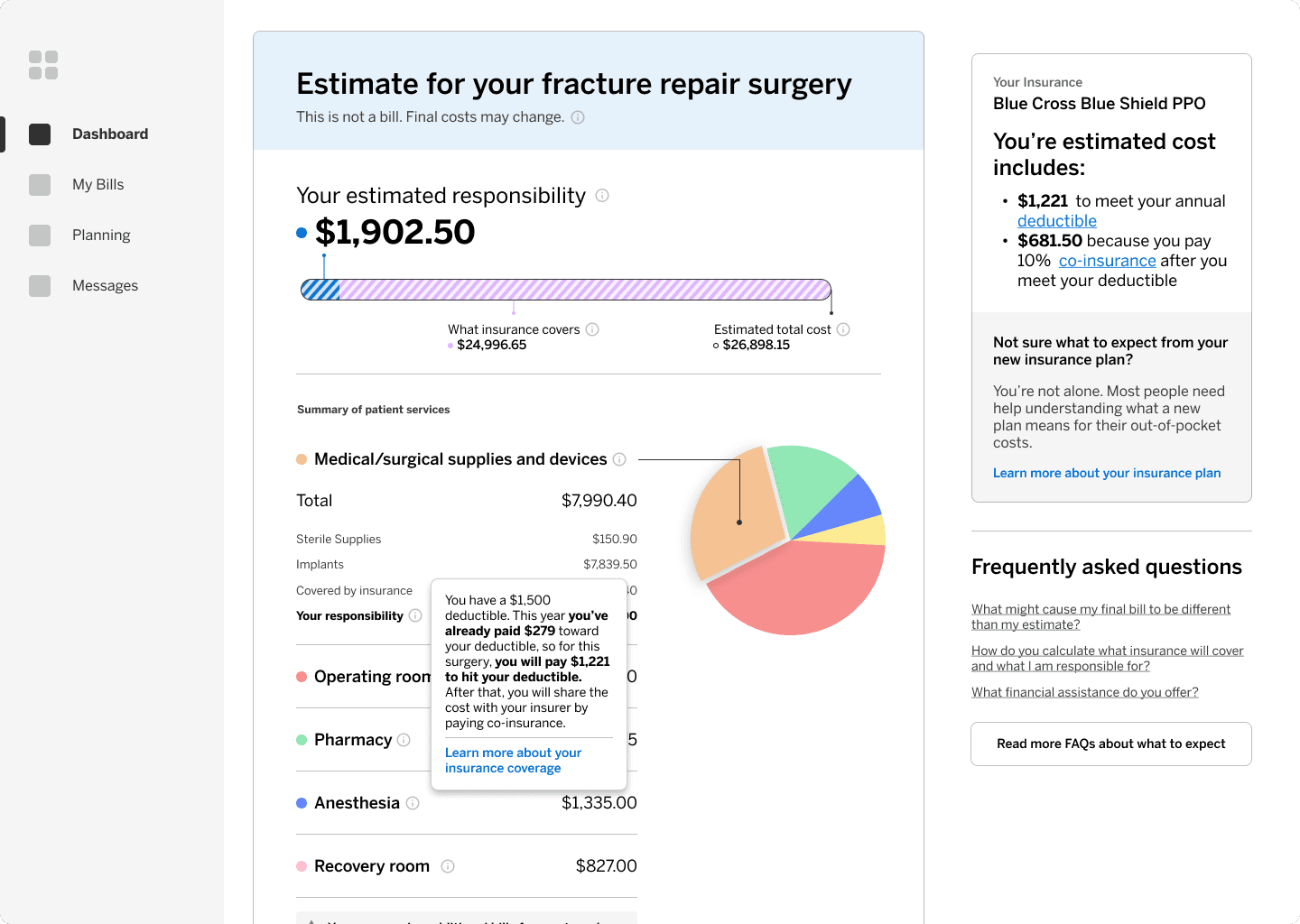
Estimate
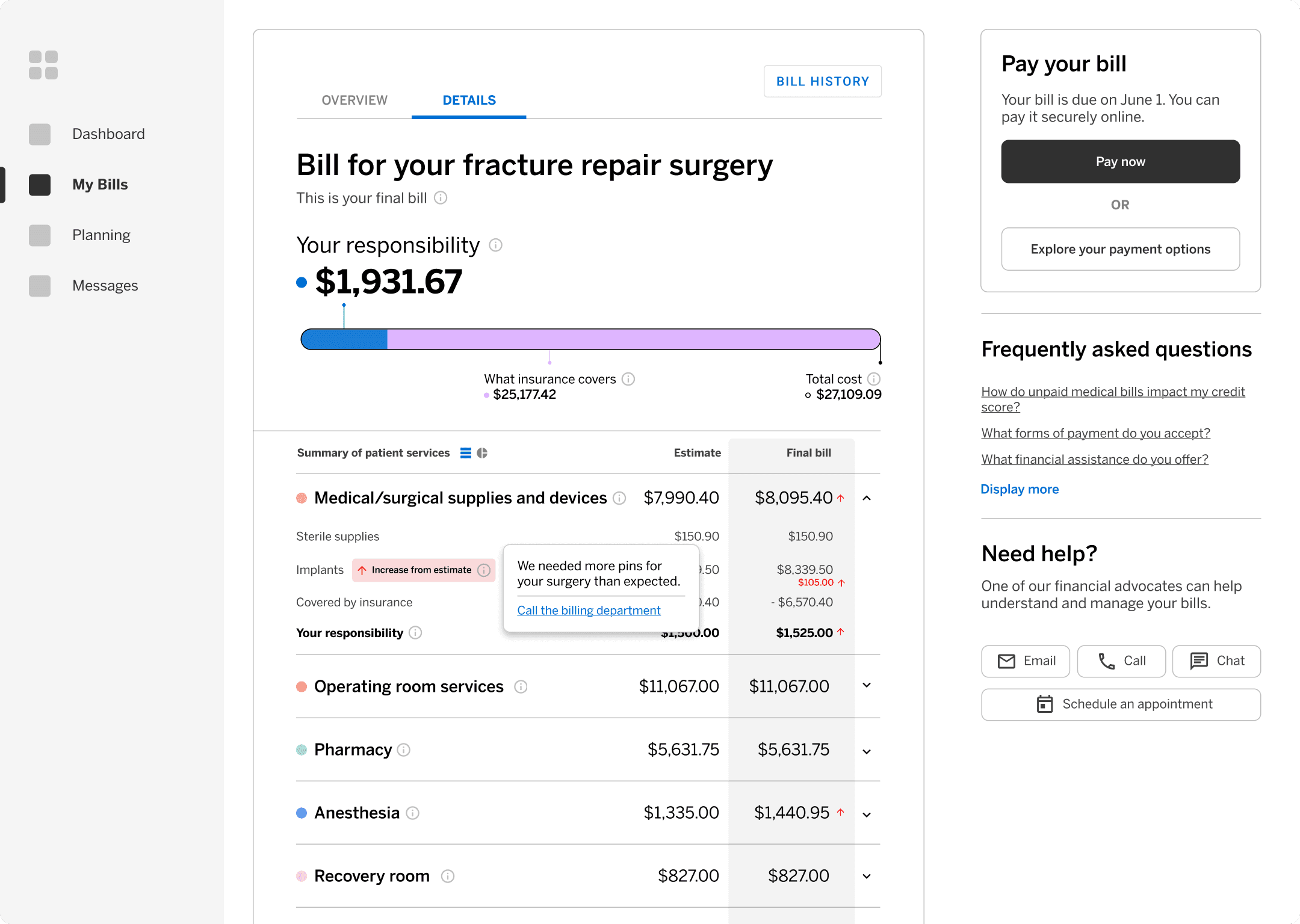
A detailed cost picture before care rather than a shock afterward. It broke charges into plain language, separated what insurance covers from what the patient owes and explained why, showed progress toward a deductible, and included a worst-case number so people knew the ceiling. The principle we kept testing against: transparency needs context. Every number arrived with an explanation a non-expert could follow.
TREAT ME AS AN INDIVIDUAL
Payment Plan
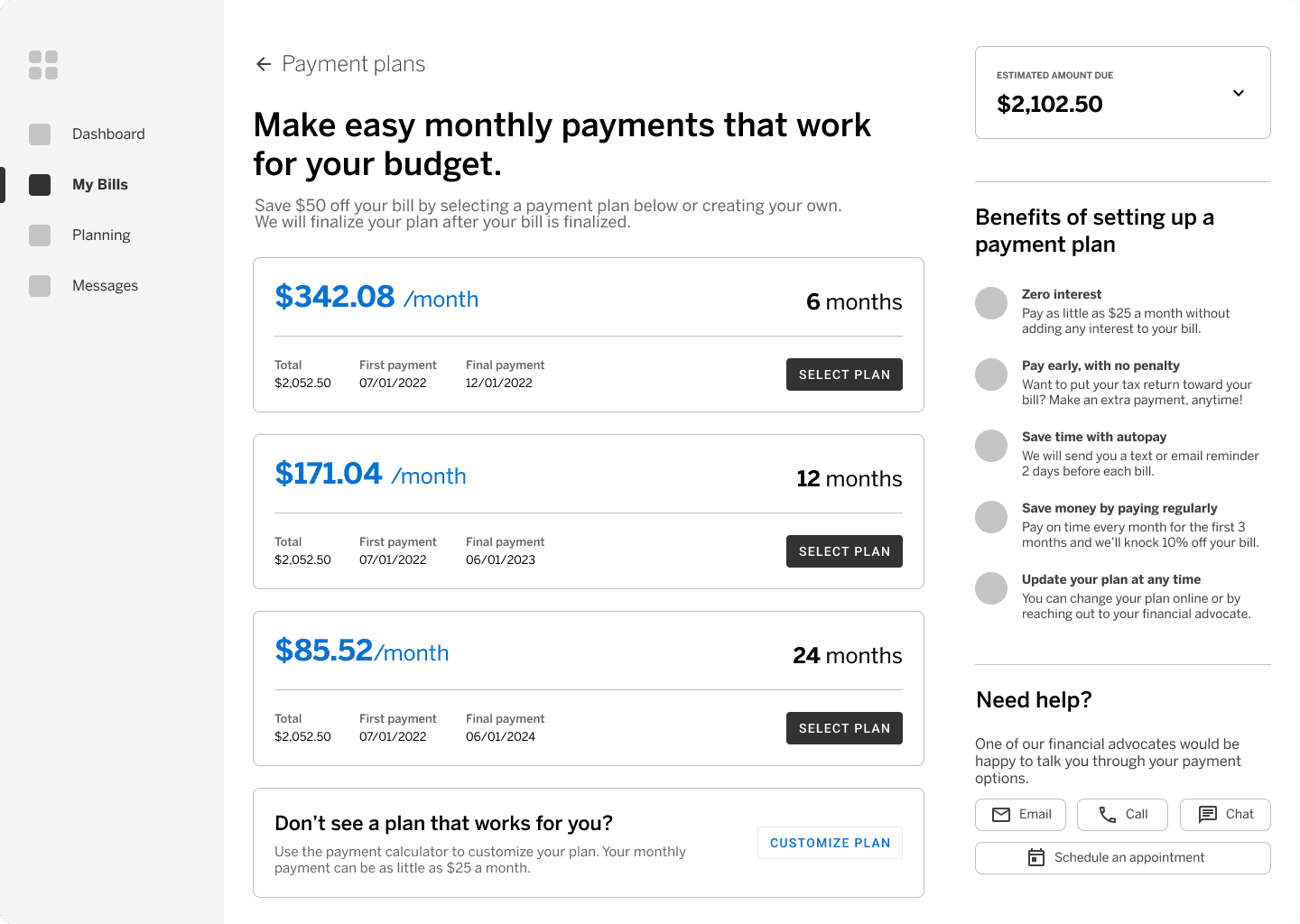
This answered the fear that flexibility always comes with a catch. It led with the absence of interest and penalties, offered preset plans alongside a calculator to build a custom one, and made clear the plan could be adjusted as life changed. The reassurance that a patient was not locked in turned out to be the part people responded to most.
06 — OUTCOME AND REFLECTION
Trust has to come before transparency
The model tested well across both rounds, and the framework gave Providence a clear, defensible direction.
Follow-on work
What stays with me from this one is how much of good financial design is emotional rather than informational. The instinct is to fix the numbers: make the bill clearer, add more detail. The research kept pointing somewhere else. People did not just need better information. They needed to believe the system was on their side before they would engage with it at all. Designing for that, the dignity and the trust ahead of the data, is the part I have carried into everything since.